

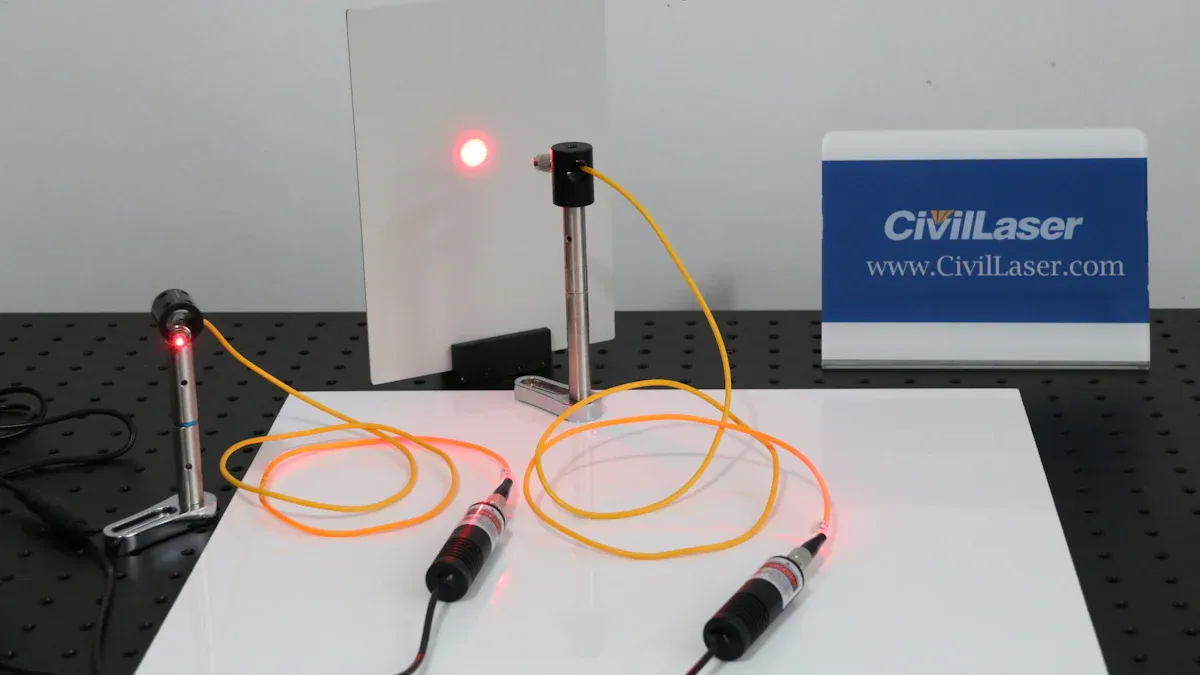
A fiber laser welding machine uses a fiber-optic laser to join metal parts with exceptional precision. You benefit from this modern solution, which creates strong welds while producing less heat and smoke than traditional methods. TiHi Laser leads the industry, offering machines that improve safety, accuracy, and efficiency.
Global demand is rising, with the market expected to grow from $1.2 billion in 2024 to $1.8 billion by 2034.
Manufacturers choose fiber laser welding for high precision, versatility, and faster production.
Fiber laser welding machines use advanced technology to create strong, precise welds with minimal heat and smoke.
The market for fiber laser welding is growing rapidly, expected to reach $1.8 billion by 2034, highlighting its increasing demand.
These machines excel in speed, completing tasks up to four times faster than traditional methods, which boosts productivity.
Precision is a key advantage, allowing for clean welds with minimal distortion, essential for industries like automotive and aerospace.
Versatility is a hallmark of fiber laser welding, enabling the joining of various materials, including metals and plastics.
Low maintenance requirements make fiber laser welding machines cost-effective, reducing downtime and operational costs.
Safety is crucial; operators must follow strict protocols and wear protective gear to prevent injuries from the powerful laser.
Investing in fiber laser welding technology can enhance your business's efficiency and product quality, making it a smart choice for modern manufacturing.
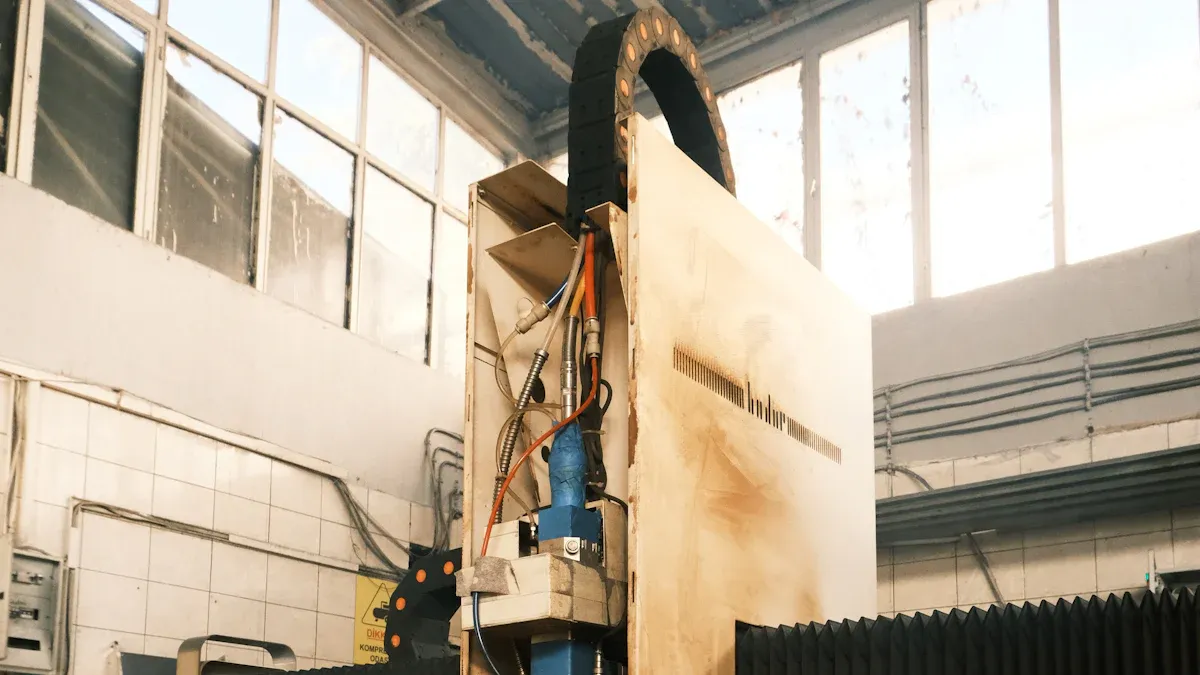
A fiber laser welding machine gives you the power to join metals with unmatched precision and speed. You use a high-powered fiber laser to create strong, clean welds with minimal heat distortion. This technology stands out in industries that demand accuracy, such as automotive, electronics, and medical device manufacturing. The core function centers on delivering high-quality welds while keeping the process efficient and versatile.
TiHi Laser leads the market by offering advanced fiber laser welding machines. You can choose from single-head, double-head, and portable models. Each option fits different production needs, from large-scale manufacturing to on-site repairs.
Here is a quick overview of the core functions:
| Core Function | Description |
|---|---|
| Precision | Produces high-quality welds with minimal heat distortion |
| Speed | Delivers unmatched productivity in industrial applications |
| Versatility | Welds a variety of materials, including metals and plastics |
| Industry Use | Essential in automotive, electronics, medical, and heavy engineering |
You benefit from several features that set a fiber laser welding machine apart from other welding technologies:
High flexibility for complex structures and hard-to-reach locations
Small spot size for precise, clean welds
Extremely high power density for deep penetration
Minimal heat-affected zone, which reduces distortion and preserves material strength
| Feature | Fiber Laser Welding | Other Welding Technologies |
|---|---|---|
| Flexibility | High for complex structures | Limited |
| Spot Size | Small for precision | Larger |
| Accessibility | Suitable for tight spaces | Difficult in constrained areas |
| Power Density | Extremely high | Lower |
| Heat-Affected Zone | Minimal due to rapid cooling | Larger |
You can use these machines for both thick plate welding and tiny parts. They work well with high-strength metals and excel in precision micro-welding. Many high-end manufacturers rely on this technology for its reliability and performance.
A fiber laser welding machine operates through a series of precise steps:
Laser Generation: The machine generates a concentrated beam of light using a fiber laser source.
Beam Delivery: The system channels the beam through fiber optics and focuses it on the exact welding spot.
Material Interaction: The focused laser melts the metal at the joint, forming a molten pool.
Cooling and Solidification: The molten pool cools rapidly, creating a strong, clean weld.
You control parameters like laser power and scanning speed to adjust the weld’s shape and size. The process produces less waste and requires fewer consumables, making it cost-effective and environmentally friendly. You also enjoy higher precision, faster production, and less maintenance compared to traditional welding methods.
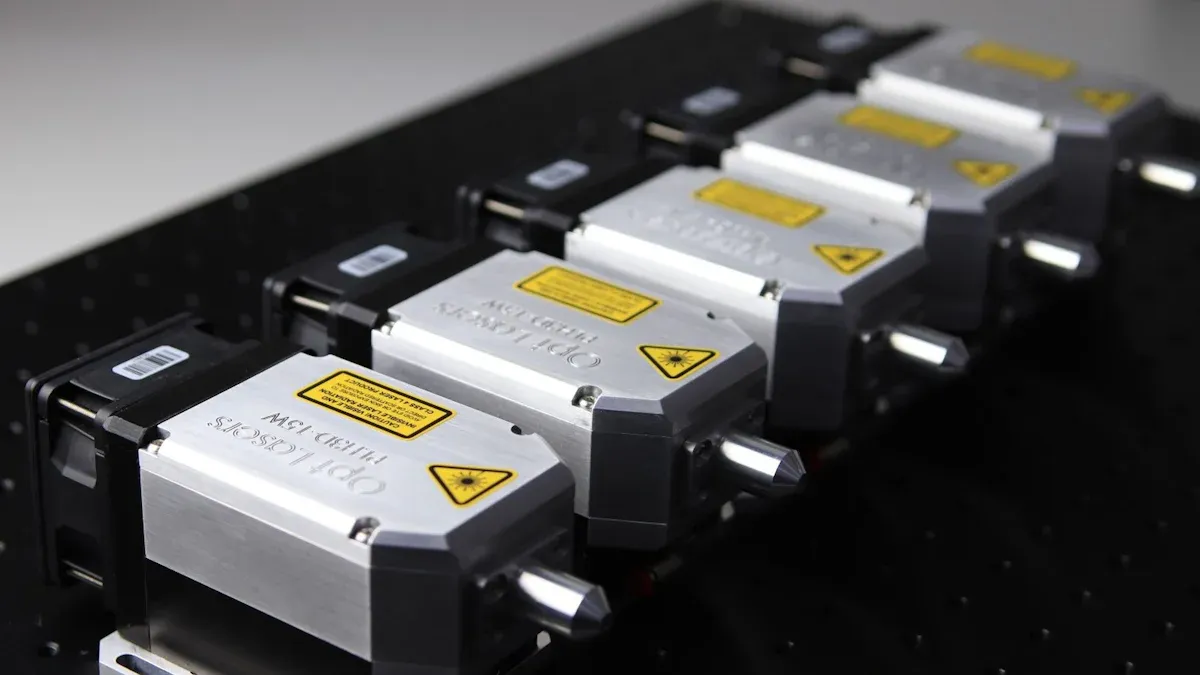
You rely on the laser source as the heart of your fiber laser welding machine. This component generates a powerful, focused beam using advanced fiber laser technology. The laser source provides high efficiency and stable output, which means you get consistent weld quality every time. You benefit from a long service life, often exceeding 100,000 hours, so you can trust your equipment for years of operation. The power supply works alongside the laser source, delivering the necessary energy for stable performance. When you choose a machine with a reliable laser source, you ensure precise and repeatable results for every project.
Tip: Always check the rated power and expected lifespan of the laser source before making your purchase. This helps you match the machine to your production needs.
The welding head delivers the laser beam directly to your workpiece. Inside the welding head, you find a focus lens that concentrates the beam for deep penetration and clean welds. Protective nozzles shield the lens and maintain a safe working environment. You can adjust the welding head to suit different joint types and material thicknesses. Many modern welding heads include features like wobble welding, which lets you create wider beads or handle gaps in the material. Lightweight designs, often between 0.8kg and 2kg, make it easier for you to maneuver the head, especially in handheld or portable models.
Note: A well-designed welding head improves your accuracy and reduces operator fatigue, especially during long shifts.
The motion system moves the welding head or workpiece with precision. You control the motion system using CNC platforms or robotic arms, depending on your application. For large-scale projects, you might use an X/Y/Z axis platform that covers up to 2000mm, giving you the flexibility to weld big parts like storage tanks or billboards. For complex shapes, robotic arms provide 3D movement, allowing you to weld irregular components with ease. The motion system ensures that the laser follows the exact path you set, which is critical for producing consistent, high-quality welds.
Here is a quick overview of the main components and their functions:
| Component | Function |
|---|---|
| Laser Source | Generates the laser beam using advanced fiber laser technology for high efficiency. |
| Power Supply | Provides necessary power to the laser source for stable operation. |
| Laser Transmission System | Transmits the laser beam from the source to the welding head for precise control. |
| Welding Head | Delivers the laser beam to the workpiece, includes focus lens and protective nozzles. |
| Cooling System | Maintains temperature during operation, increasing the service life of the laser welder. |
| Control System | Manages the settings and operations of the fiber laser welder, often with a touch screen. |
| Wire Feeder | Supports automatic wire feeding during welding, used as filling material for gaps. |
| Protective Housing | Includes safety features to protect the operator and ensure safe operation. |
When you understand each component, you can better maintain your fiber laser welding machine and achieve optimal results in your welding projects.
You rely on the control system to manage every aspect of your fiber laser welding machine. This component acts as the brain of your equipment, giving you precise command over the welding process. Modern control systems use advanced software and hardware to help you set welding parameters, monitor performance, and adjust settings in real time. You interact with intuitive touchscreens or CNC interfaces, which make operation straightforward even for new users.
Tip: A well-designed control system reduces operator error and boosts productivity.
The control system ensures consistent weld quality by continuously monitoring and adjusting key parameters. You benefit from automated systems equipped with sensors and cameras that observe the welding process as it happens. These systems detect defects immediately and correct them, so you spend less time on manual inspections. Machine vision technology provides feedback, allowing the system to make real-time adjustments for optimal results.
You can see how the control system supports your workflow:
Automated monitoring of welding speed, precision, and energy output keeps welds consistent.
Real-time feedback from cameras and sensors helps you catch and fix defects instantly.
Precise control over melt depth, focal length, and beam diameter maintains heat dissipation and penetration.
Alarm limits on weld time and depth help you predict and prevent failures before they happen.
| Control System Feature | Benefit to You |
|---|---|
| Real-Time Monitoring | Immediate defect detection |
| Automated Adjustments | Consistent weld quality |
| Parameter Control | Predictable, repeatable results |
| User-Friendly Interface | Easy operation and quick setup |
You gain confidence knowing your fiber laser welding machine maintains high standards with minimal intervention. The control system helps you achieve reliable, high-quality welds every time.
You depend on the cooling system to keep your fiber laser welding machine running smoothly. This component prevents overheating, which can damage sensitive parts and reduce machine lifespan. Cooling systems regulate temperature during operation, ensuring your equipment performs at its best.
You will find several cooling methods in fiber laser welding machines:
Water Cooling Systems: These circulate water to absorb and remove heat. You use water cooling for high-power laser systems because it provides consistent temperature control.
Air Cooling Systems: These use air circulation to dissipate heat. Air cooling works well for low-power applications. You benefit from its simplicity and cost-effectiveness.
Refrigerant Cooling Systems: These operate like air conditioning units. You rely on refrigerant cooling in extreme environments, where high efficiency and long-term reliability are essential.
Note: Proper cooling protects your investment and ensures stable weld quality.
The cooling system works alongside other components to maintain optimal performance. You avoid downtime and costly repairs by keeping your machine at the right temperature. Consistent cooling also helps you achieve smooth, defect-free welds, especially during long production runs.
| Cooling Method | Application Area | Key Benefit |
|---|---|---|
| Water Cooling | High-power systems | Stable temperature control |
| Air Cooling | Portable/low-power units | Simple and affordable |
| Refrigerant Cooling | Extreme environments | High efficiency, reliability |
You ensure the longevity of your fiber laser welding machine by choosing the right cooling system for your needs. Reliable cooling supports continuous operation and protects your equipment, so you can focus on producing high-quality welds.
You gain flexibility and convenience with handheld models. These machines let you move freely around large workpieces or reach tight spaces that fixed systems cannot access. Handheld fiber laser welding machines often come with movable pulleys, making them easy to transport within your facility or even to outdoor job sites. You can weld at any angle, which helps when you work on complex structures or perform repairs in the field.
| Advantages of Handheld Fiber Laser Welding Machines | Limitations of Handheld Fiber Laser Welding Machines |
|---|---|
| Wide welding range, suitable for outdoor and long-distance welding. | High initial cost, making it less feasible for smaller businesses. |
| Convenient and flexible to use with movable pulleys. | Requires regular maintenance and has complex systems. |
| Capable of various welding methods at any angle. | Specialized training is necessary for safe operation. |
| Produces a satisfying welding effect with minimal heat influence. | Limited compatibility with certain materials like copper or gold. |
| Reduces need for polishing after welding. | Bulky high-power models can limit portability. |
| No consumables needed, lowering material costs. | Safety risks due to high-intensity laser beams. |
| Saves labor costs with easy operation and quick learning curve. | Dependency on stable power supply limits use in remote areas. |
Tip: You can reduce labor costs and speed up training with handheld models, but always ensure proper safety training before use.
Platform systems give you a stable base for high-precision welding. You use these systems for repetitive tasks or when you need to weld large batches of parts. Platform systems often feature CNC controls, which allow you to program welding paths and automate the process. This automation increases your throughput and reduces the chance of human error.
AI integration optimizes cutting paths, saving you time and boosting productivity.
Automated nozzle adjustment lets you switch between materials quickly and maintain accuracy.
Real-time monitoring with IoT sensors helps you predict maintenance needs, keeping your machine running longer.
Robotic arms can operate continuously, reducing downtime and increasing your output.
You find platform systems widely used in automotive, aerospace, and medical device manufacturing. These industries rely on precise, repeatable welds and benefit from the system’s ability to handle complex parts with minimal supervision.
Note: Platform systems offer intuitive interfaces, so you can adjust power and speed easily. Real-time visual monitoring ensures you catch defects immediately.
Dual-head welders take your productivity to the next level. You can weld two areas at once or switch between different laser sources quickly. This flexibility helps you handle high-volume projects or work with multiple materials in a single setup.
| Benefit | Description |
|---|---|
| Enhanced Performance | Integrates laser beams for improved efficiency and precision. |
| Cost Efficiency | Combines capabilities of separate devices, reducing initial and maintenance costs. |
| Improved Reliability | Requires less maintenance, ensuring consistent operation and reducing downtime. |
| Time Savings | Allows quick switching between laser sources, enhancing operational flexibility. |
| Applications in Welding | Offers deeper weld penetration and high accuracy, especially for materials like aluminum and steel. |
You use dual-head welders in industries that demand both speed and accuracy. For example, automotive and aerospace manufacturers often choose these systems to increase throughput without sacrificing quality. You also benefit from reduced downtime, as the system can continue operating even if one head requires maintenance.
Pro Tip: Dual-head welders help you maximize your investment by combining performance, reliability, and flexibility in one fiber laser welding machine.
Portable fiber laser welding machines give you unmatched flexibility for welding tasks outside the factory floor. You can carry these compact units to job sites, remote locations, or confined spaces where traditional welding systems cannot reach. The lightweight design makes transportation easy, so you can respond quickly to urgent repair needs or on-site assembly projects.
You gain a significant advantage when you choose portable fiber laser welding machines for fieldwork. These machines weigh much less than stationary models, often under 50 pounds. You can maneuver them with ease, even in tight environments. The DenaliWeld JET EZ, for example, weighs only 48.5 pounds (22 kg), making it the smallest and lightest portable laser welder in its class. This portability lets you work efficiently in places where space is limited or access is challenging.
Portable fiber laser welding machines excel in industries that demand mobility and precision. You find them especially useful in:
Electronics manufacturing
Automotive repair and assembly
Aerospace component fabrication
Medical device production
You can rely on these machines for high-precision welding, even when working with delicate or complex parts. The continuous laser generator ensures deep penetration and strong welds, so you achieve durable results with minimal distortion. You also benefit from automatic wire-feeding devices, which improve accuracy and speed during welding tasks.
| Feature | Description |
|---|---|
| Design | Lightweight and compact, easy to transport and operate in confined spaces. |
| Precision | Delivers high-precision welds for demanding industries. |
| Versatility | Welds stainless steel, carbon steel, aluminum, and other metals. |
| Efficiency | Continuous laser output for deep, strong welds and higher productivity. |
| Automation | Automatic wire-feeding enhances accuracy and efficiency. |
You can use portable fiber laser welding machines for a wide range of materials. Stainless steel, carbon steel, and aluminum are common choices. You get clean, durable welds with minimal heat distortion, which means less post-weld finishing and higher product quality.
Tip: Portable options are ideal for on-site, high-precision welding across many industries. You can tackle remote welding tasks with confidence, knowing your equipment delivers reliable performance wherever you need it.
You also save time and labor costs. The easy setup and intuitive controls allow you to start welding quickly, even if you have limited experience. You do not need to worry about complex installation or heavy infrastructure. You simply plug in the machine and begin your work.
Portable fiber laser welding machines help you meet the demands of modern manufacturing and repair. You stay productive and efficient, whether you work in a factory, a workshop, or out in the field. With these versatile tools, you can deliver professional results anywhere your job takes you.
You achieve remarkable speed and efficiency when you use a fiber laser welding machine. This technology transforms your workflow and helps you meet tight deadlines with ease. You can complete welding tasks much faster than with traditional methods.
You finish jobs up to four times faster than TIG welding.
In one case, you reduce welding time from 90 minutes with TIG to just 10 minutes using a laser system.
You save valuable time and increase your output. You also benefit from minimal spatter and reduced need for post-weld cleaning. The machine’s high energy density allows you to weld thicker materials in a single pass. You spend less time on each project and deliver consistent results. This efficiency helps you lower labor costs and boost your productivity.
Tip: Faster welding means you can take on more projects and grow your business without sacrificing quality.
You gain unmatched precision with a fiber laser welding machine. The focused laser beam gives you control over heat input, which is essential for producing high-quality welds. You can work on intricate designs and small parts without damaging surrounding areas.
You use concentrated heat to create clean, neat, and deeply penetrating seams.
You minimize the heat-affected zone, which preserves the strength and appearance of your materials.
You achieve accurate and controlled welds, which are crucial for industries like aerospace and automotive.
You excel in precision, especially when working with complex shapes or fine details.
You focus on specific areas, avoiding unwanted effects on nearby surfaces.
You deliver reliable results for demanding applications, such as medical devices and electronics.
Laser welding offers extremely focused energy. You produce small, clean welds that meet strict industry standards. You can trust your machine to deliver consistent quality, even on the most delicate projects.
Note: High precision reduces rework and waste, helping you maintain a competitive edge.
You benefit from the versatility of a fiber laser welding machine. You can weld a wide range of materials, which makes your equipment suitable for many industries and applications. You switch between metals and non-metals with ease, adapting to different project requirements.
| Material Type | Examples |
|---|---|
| Metals | Stainless steel, carbon steel, aluminum, galvanized steel, copper |
| Non-metals | Plastics, rubber, wood, foam, paper, laminates, organic & fiber materials |
You handle diverse tasks, from automotive frames to medical instruments. You work with stainless steel, aluminum, and copper, as well as plastics and organic materials. This flexibility allows you to expand your service offerings and tackle new challenges.
Pro Tip: Versatile welding capabilities help you serve more clients and enter new markets.
You rely on your fiber laser welding machine to deliver speed, precision, and versatility. These advantages set you apart in a competitive industry and support your growth.
You want a welding solution that keeps your downtime and maintenance costs low. Fiber laser welding machines deliver exactly that. When you choose this technology, you spend less time on upkeep and more time producing quality welds. The design of fiber laser systems focuses on durability and reliability. You do not need to worry about frequent part replacements or complicated servicing.
Fiber laser welding machines stand out because they have fewer moving parts than traditional welding equipment. The laser source itself is sealed and maintenance-free for up to 100,000 hours. You avoid the hassle of changing electrodes, cleaning soot, or dealing with consumables like filler rods and shielding gases. This means you save money on supplies and reduce the risk of unexpected breakdowns.
Routine maintenance for your fiber laser welding machine is straightforward. You can follow a simple checklist to keep your equipment in top shape:
Maintain a clean and stable operating environment for your machine. Dust and debris can affect performance, so regular cleaning helps prevent issues.
Check the optical path components. Make sure the lenses and mirrors are free from dirt or damage. Clean them gently if needed.
Monitor the conductivity of the circulating water. This step ensures the cooling system works efficiently and protects the laser source from overheating.
Inspect the quality of the laser beam. A consistent, focused beam means your welds stay precise and strong.
Follow other safety and usage precautions recommended by the manufacturer. This includes checking cables, connections, and software updates.
Tip: By following these steps, you extend the lifespan of your machine and avoid costly repairs.
You also benefit from advanced features in TiHi Laser’s fiber laser welding machines. The robust construction and smart cooling systems reduce the risk of overheating. Automated monitoring alerts you to any irregularities before they become problems. You can rely on user-friendly interfaces that guide you through maintenance tasks, even if you have limited technical experience.
Compared to arc welding or TIG/MIG systems, you spend less time on maintenance and more time on production. You do not need to schedule frequent service visits or stockpile spare parts. This efficiency helps you control your operating budget and keeps your workflow smooth.
When you invest in a TiHi Laser fiber laser welding machine, you gain peace of mind. You know your equipment will run reliably, day after day, with minimal intervention. This low-maintenance advantage lets you focus on what matters most—delivering high-quality welds and growing your business.
You face a significant initial investment when you choose a fiber laser welding machine. The upfront cost often exceeds that of traditional welding systems. Many small businesses find this barrier challenging. MIG welding systems usually cost less at the start. TIG welding, while slower and more labor-intensive, also presents a lower entry price. You must weigh these factors before making a decision.
Fiber laser welding machines require a higher initial investment than MIG or TIG systems.
MIG welding offers a more affordable option for businesses with limited budgets.
TIG welding demands more manual labor and time, which can increase operational costs over time.
Fiber laser welding delivers high precision, speed, and low maintenance, which can offset the initial expense in the long run.
You should consider the long-term benefits. Fiber laser welding machines help you reduce labor costs, minimize maintenance, and improve productivity. Over time, these advantages can justify the higher upfront investment. You make a strategic choice when you invest in advanced technology that supports your business growth.
You need specialized training to operate a fiber laser welding machine safely and effectively. The technology involves unique hazards and procedures. You must understand the laser class, wavelength, and specific application. Training programs cover essential topics to prepare you for safe operation.
Role-specific training ensures you know how to handle the equipment based on your job responsibilities.
Foundational instruction teaches you about laser classifications, hazard recognition, and beam path awareness.
PPE education guides you in selecting and using the right protective equipment for laser welding.
Hands-on exercises provide simulations for emergency procedures and incident response.
Emergency procedures training helps you understand evacuation protocols and injury response.
You gain confidence and competence through proper training. You protect yourself and your team by following safety guidelines. You also improve your efficiency and reduce the risk of accidents. Investing in training supports a safer and more productive workplace.
You encounter certain material limitations when using fiber laser welding machines. These factors affect the range of applications and the quality of your welds. The properties of each material play a crucial role in the welding process.
| Property Type | Limitation Description |
|---|---|
| Thermal Properties | Lower melting points facilitate welding, while high thermal conductivity can lead to rapid cooling and defects. |
| Chemical Properties | Oxidation can degrade weld quality, and chemical reactions at high temperatures may compromise weld integrity. |
| Physical Properties | The coefficient of thermal expansion affects deformation, and material hardness influences the molten pool's behavior. |
| Material Adaptability | Reflective and transparent materials pose significant challenges for effective laser welding. |
| Process Control | High-temperature gradients can cause deformation, and complex shapes complicate weld seam control. |
| Cost and Complexity | High equipment costs and the need for skilled operators can limit application scope. |
| Production Efficiency | Laser welding may not match the speed of traditional methods in high-volume production scenarios. |
You must evaluate the thermal, chemical, and physical properties of your materials before starting a project. Reflective metals and transparent materials often require special techniques or equipment. You also need to control temperature gradients and manage complex shapes to achieve consistent results. Understanding these limitations helps you select the right materials and processes for your application.
Operating a fiber laser welding machine brings powerful technology to your workspace, but you must always prioritize safety. The intense laser beam can cause serious injuries if you do not follow strict safety protocols. You need to understand the risks and take the right precautions every time you use the equipment.
Fiber laser welding machines emit high-intensity light that can damage your eyes and skin. You also face risks from hot metal, sparks, and fumes. To protect yourself and your team, you should follow industry-standard safety measures. These steps help you create a safe environment and reduce the chance of accidents.
Here is a summary of essential safety measures you should implement:
| Safety Measure | Description |
|---|---|
| Protective Eyewear | Use welding helmets and safety glasses with UV and IR filters. |
| Safe Distance | Observers must maintain a distance of at least 120 meters and use designated viewing areas. |
| Enclosures and Controlled Access | Operate lasers in enclosed areas with restricted access for trained personnel only. |
| Personal Protective Equipment (PPE) | Include laser safety goggles, flame-resistant clothing, gloves, and ventilation systems. |
| Hazard Signage | Mark entry points with warnings about laser radiation and its risks. |
| Beam Control and Emergency Shutdowns | Implement physical barriers and accessible emergency shutoff systems. |
| Training and Safety Protocols | Provide laser safety training and establish clear Standard Operating Procedures (SOPs). |
| Ventilation and Fume Extraction | Ensure adequate ventilation to manage hazardous fumes and maintain air quality. |
You must always wear the right personal protective equipment. This includes laser safety goggles, flame-resistant clothing, and gloves. You should also make sure your workspace has proper ventilation to remove fumes and keep the air clean.
Tip: Place clear warning signs at every entry point. This alerts everyone to the presence of laser radiation and reminds them to use proper protection.
You should only allow trained personnel to operate the fiber laser welding machine. Limit access to the area and use physical barriers or enclosures to keep others safe. Emergency shutdown systems must be easy to reach in case you need to stop the machine quickly.
Regular training is essential. You and your team should know how to handle the equipment, recognize hazards, and respond to emergencies. Standard Operating Procedures (SOPs) help you maintain consistency and safety in every operation.
You also need to control the laser beam path. Use barriers to prevent accidental exposure and keep bystanders at a safe distance. Observers should stay at least 120 meters away or remain in designated viewing areas.
By following these safety measures, you protect yourself, your team, and your investment. A safe workplace lets you focus on producing high-quality welds with confidence and peace of mind.
When you compare arc welding to a fiber laser welding machine, you notice clear differences in speed, quality, and cost. Arc welding uses an electric arc to melt metals, which often leads to slower production and less precise results. You may encounter more defects and spend extra time on post-weld cleaning.
Here is a table that highlights the main differences:
| Aspect | Fiber Laser Welding | Arc Welding |
|---|---|---|
| Speed and Productivity | Faster welding times, increasing production | Slower compared to fiber laser |
| Precision and Quality | More precise control, cleaner welds | Less precision, potential for defects |
| Operational Costs | Lower energy consumption, fewer consumables | Higher operational costs |
| Environmental Impact | Produces less emissions and waste | More waste due to filler materials |
| Safety | Reduced risk due to automation | Higher risk with open flames |
You pay more upfront for a fiber laser welding machine, but you save money over time. Lower energy use and fewer consumables mean your operating costs drop. You also spend less on maintenance, which helps your bottom line.
Consider these advantages:
You achieve cleaner, more consistent welds.
You reduce labor costs by minimizing post-weld processing.
Tip: If you want higher quality and efficiency, fiber laser welding stands out as a smart investment.
TIG and MIG welding are common choices for joining metals. You use a contact method, which can cause friction and deformation. Manual adjustments slow down your workflow and limit flexibility. When you switch to a fiber laser welding machine, you gain rapid positioning and precise machining.
Compare the features in this table:
| Feature | Fiber Laser Welding Machines | MIG/TIG Welding Machines |
|---|---|---|
| Energy Density | High energy density, enabling rapid positioning and precision machining | Lower energy density, less precision |
| Beam Quality | Highly directional, monochromatic, and coherent | Less directional, lower quality |
| Processing Method | Non-contact, avoiding friction and deformation | Contact method, prone to friction and deformation |
| Flexibility | Easily programmable for various operations | Less flexible, manual adjustments required |
| Production Efficiency | High efficiency due to non-contact processing | Lower efficiency due to contact processing |
You program your fiber laser welding machine for different tasks, which saves time and reduces errors. You avoid the wear and tear that comes from physical contact. You also enjoy higher efficiency, especially for complex or repetitive jobs.
Note: You improve your workflow and product quality when you choose fiber laser welding over traditional TIG/MIG methods.
CO2 laser welding uses a gas-based laser to join metals. You get less precision and slower speeds compared to fiber laser technology. The beam is broader, which increases the heat-affected zone and can cause more thermal distortion.
Review the comparison below:
| Aspect | Fiber Laser Welding | CO2 Laser Welding |
|---|---|---|
| Beam Quality | Superior, concentrated beam for precision | Broader beam, less precision |
| Efficiency | 25%-30% electro-optical conversion | 10%-20% electro-optical conversion |
| Lifespan | Up to 100,000 hours | Around 20,000 hours |
| Maintenance | Less frequent maintenance required | More regular maintenance needed |
| Welding Speed & Precision | Excels in speed and precision for metals | Slower, less precise for metals |
| Heat-Affected Zone (HAZ) | Minimizes HAZ, better weld quality | Higher HAZ, more thermal distortion |
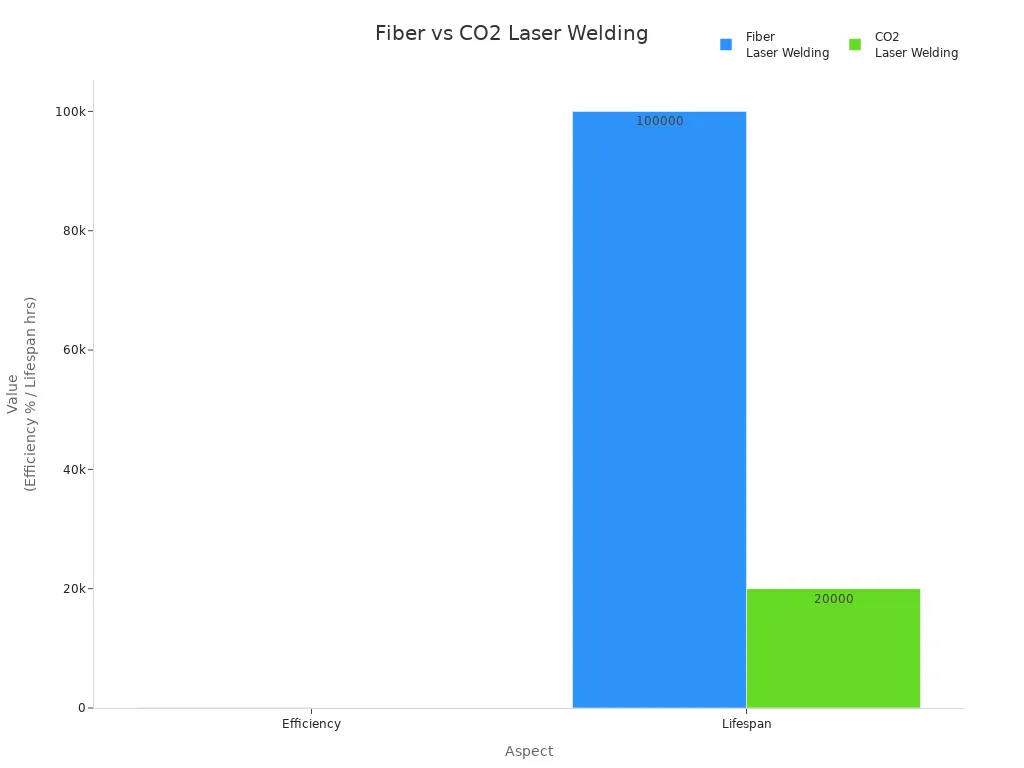
You benefit from a longer lifespan and less frequent maintenance with fiber laser welding. You also achieve better weld quality and reduce the risk of defects. If you want to maximize efficiency and precision, fiber laser welding offers clear advantages over CO2 laser systems.
Tip: Choose fiber laser welding for superior results, lower maintenance, and long-term reliability.
You play a vital role in the automotive industry when you use advanced welding technology. A fiber laser welding machine helps you achieve precise and strong welds on critical components. You can join aluminum alloy brackets, copper pipe joints, and thin sheet metals with minimal distortion. This technology allows you to produce lightweight car bodies and battery modules for electric vehicles. You improve fuel efficiency and safety by creating reliable welds that withstand vibration and stress.
Automotive manufacturers rely on your expertise to assemble chassis, exhaust systems, and door frames. You benefit from high-speed welding, which increases your production rate. You also reduce post-weld finishing because the machine produces smooth seams. You can automate repetitive tasks with CNC platforms or robotic arms. This automation ensures consistent quality and lowers labor costs.
Tip: You can use fiber laser welding to repair damaged parts on-site, saving time and reducing downtime for your clients.
You support the aerospace sector by delivering welds that meet strict safety and performance standards. A fiber laser welding machine enables you to join titanium alloy assemblies, brackets, and thin-walled structures. You achieve deep penetration and minimal heat-affected zones, which preserves the integrity of sensitive materials. You help manufacturers build lightweight aircraft components that resist fatigue and corrosion.
Aerospace engineers trust your skills for welding turbine blades, fuel tanks, and sensor housings. You use precise control to avoid defects and ensure airtight seals. You can handle complex geometries with robotic arms and multi-axis platforms. This flexibility lets you work on irregular shapes and intricate designs. You contribute to safer flights and longer-lasting aircraft by producing high-quality welds.
| Aerospace Component | Welding Requirement | Benefit to You |
|---|---|---|
| Titanium brackets | Deep penetration | Strong, reliable joints |
| Sensor housings | Minimal heat distortion | Preserves sensitive parts |
| Fuel tanks | Airtight seals | Prevents leaks and failures |
You advance medical technology by providing precise and clean welds for critical devices. A fiber laser welding machine allows you to join titanium implants, stainless steel instruments, and micro-sized components. You achieve accuracy within ±0.05mm, which is essential for medical applications. You help manufacturers produce surgical tools, pacemaker cases, and diagnostic equipment.
Medical device companies depend on your ability to create smooth, contamination-free welds. You minimize the risk of defects and ensure biocompatibility. You can weld tiny parts without damaging surrounding areas. This precision supports the development of minimally invasive instruments and life-saving devices.
Note: You must follow strict quality standards when welding medical devices. Consistent results protect patient safety and support regulatory compliance.
You work in metal fabrication when you shape, cut, and join metal parts for products like furniture, machinery, and signage. Fiber laser welding machines give you a powerful tool to improve your workflow and deliver high-quality results. You can weld thin sheets, thick plates, and complex assemblies with precision and speed.
You often face challenges in metal fabrication. You need to join different metals, handle intricate designs, and meet strict quality standards. Fiber laser welding machines help you overcome these obstacles. You achieve clean welds with minimal distortion, even on delicate materials like stainless steel or aluminum.
Tip: Use fiber laser welding to reduce post-weld grinding and polishing. You save time and lower your labor costs.
You benefit from several key advantages in metal fabrication:
High Precision: You create smooth, consistent welds that meet tight tolerances.
Speed: You finish jobs faster, which helps you meet deadlines and increase output.
Versatility: You weld a wide range of metals, including carbon steel, stainless steel, and copper.
Low Heat Input: You minimize warping and preserve the strength of your materials.
You can automate your welding process with CNC fiber laser welding systems. You program the machine to follow exact paths, which ensures repeatable results. You also use handheld or portable models for on-site repairs or custom projects.
Here is a table showing how fiber laser welding compares to traditional methods in metal fabrication:
| Feature | Fiber Laser Welding | Arc Welding | TIG/MIG Welding |
|---|---|---|---|
| Weld Quality | Excellent | Good | Good |
| Speed | Fast | Moderate | Slow |
| Precision | High | Moderate | High |
| Material Range | Wide | Limited | Wide |
| Post-Weld Finishing | Minimal | Required | Required |
You use fiber laser welding for many applications in metal fabrication:
Sheet metal chassis for electronics
Stainless steel furniture and fixtures
Decorative metal signs and billboards
Custom brackets and supports
You improve your productivity and product quality when you choose fiber laser welding. You deliver strong, attractive welds that stand up to daily use. You also reduce waste and save on consumables, which helps your bottom line.
Note: TiHi Laser offers fiber laser welding machines with features like dual-head platforms and portable options. You select the right configuration for your shop and maximize your efficiency.
You stay ahead in the metal fabrication industry by adopting advanced welding technology. Fiber laser welding machines help you meet customer demands and grow your business with confidence.
You gain a competitive edge when you choose a fiber laser welding machine for your operations. This technology delivers speed, precision, and versatility across industries. TiHi Laser offers advanced solutions and expert support, helping you select the right configuration for your needs. Boost your productivity and product quality today. For tailored advice or more details, reach out to TiHi Laser’s team.
You can weld stainless steel, carbon steel, aluminum, copper, and nickel alloys. Some models also handle plastics and coated metals. Always check your machine’s specifications for compatibility.
Most fiber laser welding machines handle thicknesses from 0.5 mm to 5 mm. High-power models reach up to 6 mm. You should select the right power level for your specific application.
You need basic training to operate handheld models. CNC systems require programming knowledge. TiHi Laser provides user-friendly interfaces and support resources to help you get started quickly.
Clean optical lenses regularly.
Monitor coolant levels.
Inspect cables and connections.
Replace consumables as needed.
Routine checks keep your machine running smoothly and extend its lifespan.
You use a standard 220V single-phase power supply for most portable models. Industrial systems may require 380V. Always confirm your facility’s power compatibility before installation.
| Feature | Fiber Laser Welding | TIG/MIG Welding |
|---|---|---|
| Speed | 3–5x faster | Slower |
| Precision | High | Moderate |
| Maintenance | Low | Higher |
You achieve faster, cleaner welds with less maintenance using fiber laser technology.
You must wear laser safety goggles and flame-resistant clothing. Operate the machine in a controlled area. Follow manufacturer guidelines and safety protocols to protect yourself and others.
You can use portable fiber laser welding machines for on-site repairs. Lightweight designs and flexible cables let you work in tight spaces or remote locations. You complete jobs quickly and efficiently.

