

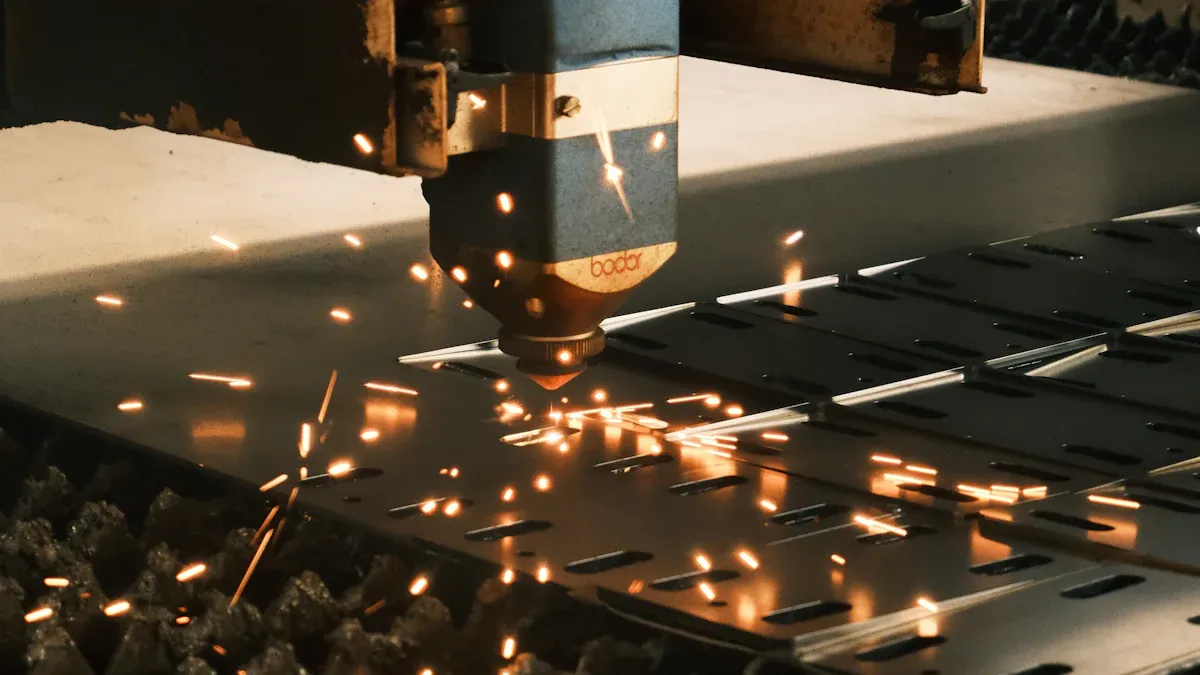
A fiber laser welding machine lets you join metals and alloys with unmatched precision, making it a top choice in industries like automotive, electronics, and medical device manufacturing. You benefit from advanced technology that offers fast operation, minimal heat distortion, and high energy efficiency. Manufacturers worldwide prefer this solution for its ability to handle complex production needs, as shown by the market’s projected growth from $1.2 billion in 2024 to $1.8 billion by 2034.
| Feature | Fiber Laser Welding Machines | Traditional Welding Technologies |
|---|---|---|
| Precision | High, minimal distortion | Inconsistent, manual control |
| Speed | Fast, deep penetration | Slower, manual heat control |
| Heat Input | Low, less warping | High, more risk of warping |
| Energy Use | Efficient, fewer fumes | Higher, more pollutants |
Fiber laser welding machines offer high precision, allowing for clean and consistent welds with minimal defects.
These machines operate at high speeds, significantly reducing project timelines compared to traditional welding methods.
Fiber lasers are versatile and can weld a wide range of materials, including metals like stainless steel, aluminum, and copper.
Low heat input during the welding process minimizes warping and preserves the integrity of delicate components.
Investing in fiber laser technology leads to long-lasting performance and durability in welded joints.
Automated fiber laser systems enhance productivity by integrating with robotics and conveyors for high-volume manufacturing.
Regular maintenance and proper safety protocols are essential for optimal operation and operator safety.
Choosing the right fiber laser machine depends on your specific production needs, material types, and desired automation level.
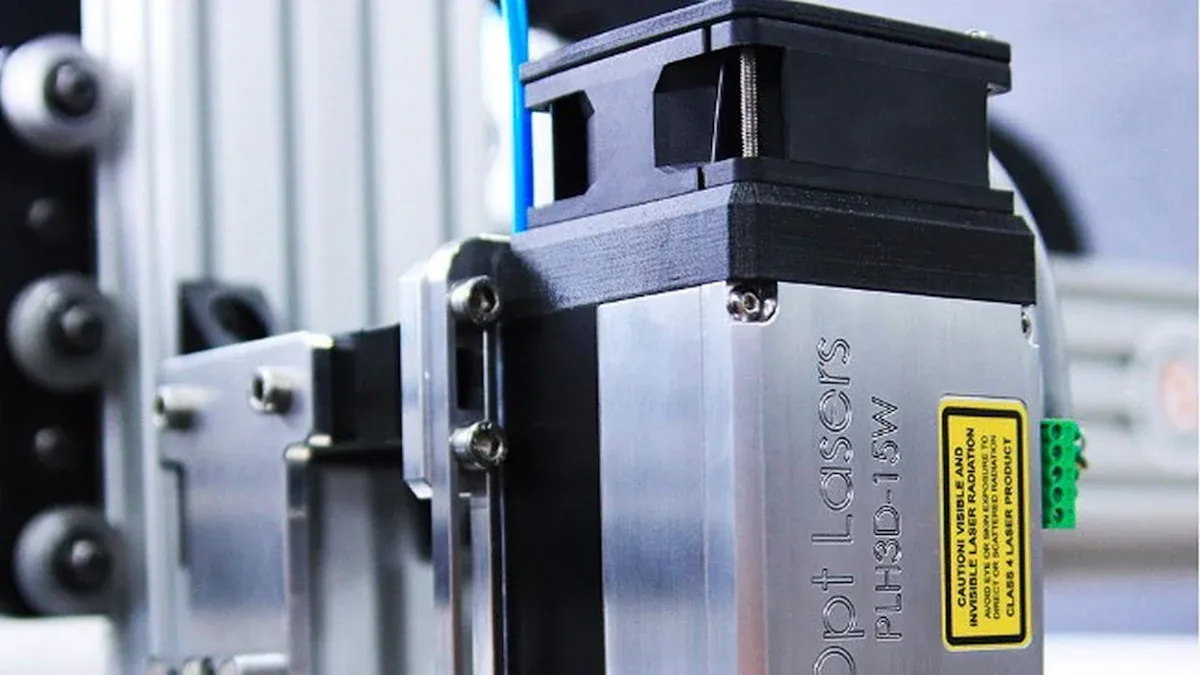
You use a fiber laser welding machine to join metals with remarkable accuracy. The process starts when the machine generates a focused laser beam. This beam acts as a powerful energy source, heating a small area to temperatures over 10,000°C. The intense heat melts the metal surfaces, allowing them to fuse together and form a strong, narrow seam.
The optical properties of the laser give you precise control, making it possible to weld tiny parts or reach difficult spots. You benefit from minimal heat input, which means less distortion and a cleaner finish.
Here’s how the basics work:
The machine creates laser light through stimulated emission.
The beam focuses to a precise point, delivering energy exactly where you need it.
The laser interacts with the metal, forming a weld pool that cools into a durable joint.
This method produces deep, narrow welds with a reduced heat-affected zone compared to traditional welding. You achieve high precision and strong results, even on delicate or complex components.
A fiber laser welding machine relies on several specialized parts to deliver consistent, high-quality welds. Each component plays a critical role in the process:
| Component | Role in Welding Process |
|---|---|
| Power supply | Converts electrical current into direct current (DC) for the pump source. |
| Laser source | Generates laser light through a pump source, gain medium, and laser cavity. |
| Fiber optics cable | Guides laser light to the processing surface. |
| Fiber collimator | Focuses the laser light into a single direction for better energy concentration. |
| Beam expander | Increases the size of the laser beam to tolerate surface variations better. |
| Scanning head | Controls the direction of the laser beam using rotating galvo mirrors. |
| Focusing lens | Focuses the laser beam on the surface being processed. |
| Focus shifter | Adjusts the focal distance dynamically to accommodate surface variations. |
| Wire feeder | Adds filler material during welding, useful for achieving high weld quality. |
| Shield gas | Prevents oxidation of welds and reduces defects, enhancing weld quality. |
| Laser controller | Adjusts laser parameters and controls safety features during the welding process. |
| Fume extraction unit | Removes toxic fumes generated during welding to ensure a safe work environment. |
| Laser weld monitor | Provides real-time analysis of the welding process to ensure quality and detect deviations. |
| Chiller | Manages heat generated by high-power lasers to maintain optimal operating temperature. |
You interact with these components through a user-friendly interface, allowing you to adjust settings for different materials and applications. The combination of these parts ensures that your fiber laser welding machine delivers reliable performance every time.
When you operate a fiber laser welding machine, you experience a process designed for speed, precision, and versatility. The machine directs a concentrated laser beam onto the metal surface. The energy from the beam quickly heats and melts the material, forming a weld pool. As the laser moves along the joint, the molten metal solidifies, creating a seamless bond.
You can weld a wide range of metals, including stainless steel, aluminum, copper, and even combinations of different materials.
The focused beam minimizes the heat-affected zone, so you see less warping and cleaner edges.
The process works at high speeds, letting you complete projects faster than with traditional welding.
You also benefit from advanced features like real-time monitoring and automated controls. These tools help you maintain consistent quality and adapt to different production needs. The fiber laser welding machine stands out for its ability to deliver deep penetration with less thermal distortion, making it ideal for both heavy-duty and delicate applications.
You achieve unmatched precision when you use a fiber laser welding machine. The focused laser beam allows you to control the weld with extreme accuracy, which reduces the risk of defects and ensures a clean, consistent finish. You can create narrow, deep welds with minimal heat-affected zones, making it possible to join even the most delicate components without causing damage.
Here’s a quick comparison of how fiber laser welding improves precision over traditional methods:
| Improvement Type | Description |
|---|---|
| High precision | Laser welding offers high precision with a decrease in welding defects. |
| Control over process | Better control over the welding process compared to traditional methods. |
| Weld characteristics | Ability to create narrow and deep welds with minimal heat-affected zones. |
| Bead formation | Precise control over the weld bead shape and size, enhancing integrity and aesthetics. |
You benefit from this level of control whether you work on microelectronics, medical devices, or automotive parts. TiHi Laser’s machines use advanced optics and real-time monitoring to help you maintain the highest standards in every weld.
Tip: Precision welding reduces the need for post-processing, saving you time and resources.
You complete welding tasks much faster with a fiber laser welding machine than with traditional welding technologies. The high energy density of the laser beam melts metals quickly, allowing you to move at speeds that other methods cannot match. This efficiency boosts your productivity and shortens project timelines.
Compare typical welding speeds:
| Welding Technology | Speed (m/min) |
|---|---|
| Fiber Laser Welding | Up to 10 |
| TIG Welding | 0.1 - 0.5 |
| MIG Welding | 1 - 2 |
| Submerged Arc Welding | 0.5 - 5 |
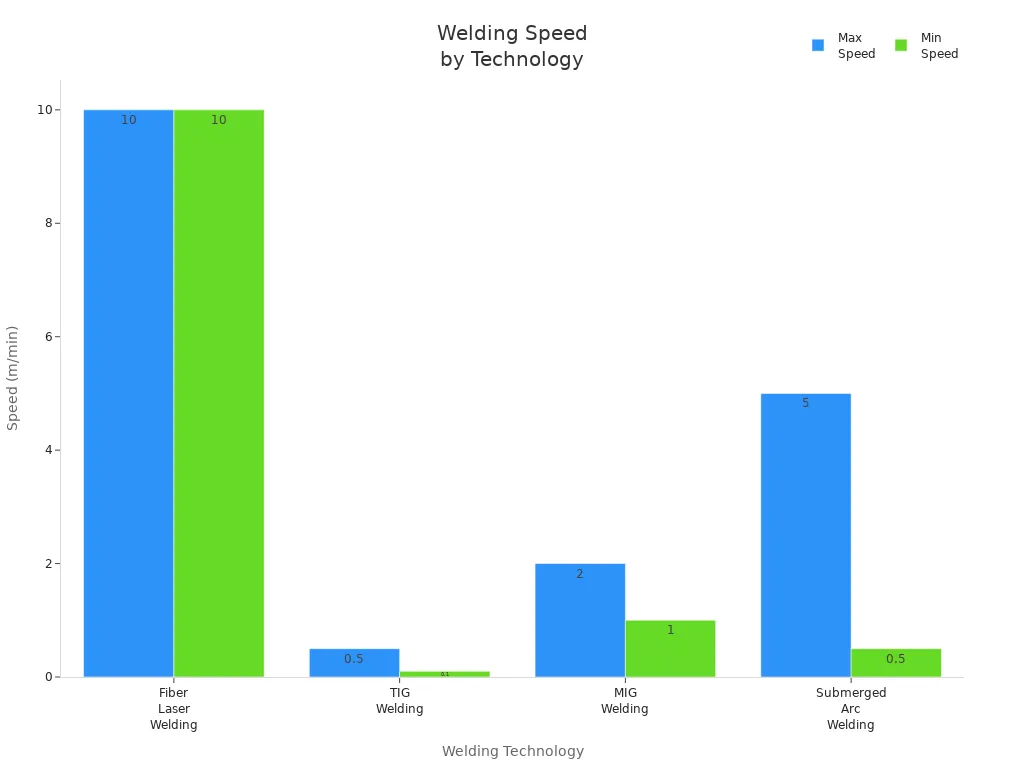
You can see that fiber laser welding outpaces other methods by a wide margin. This speed advantage is especially valuable in high-volume manufacturing environments, where every minute counts.
You gain exceptional versatility with a fiber laser welding machine. You can weld a broad range of metals and alloys, including stainless steel, carbon steel, aluminum, copper, brass, titanium, and nickel alloys. The machine adapts to different material thicknesses and power levels, so you can handle everything from fine jewelry to heavy industrial components.
Here’s a breakdown of material capabilities by laser power:
| Laser Power | Material Type | Maximum Thickness |
|---|---|---|
| 1kW | Mild Steel | 2 mm |
| Stainless Steel | 1.5-2 mm | |
| Aluminum | 1.5-2 mm | |
| 1.5kW | Steel | 3-4 mm |
| Aluminum | 3 mm | |
| 2kW | Steel | 3-4 mm |
| Aluminum | 3 mm | |
| 3kW | Mild Steel | 6 mm |
| Aluminum | 4 mm |
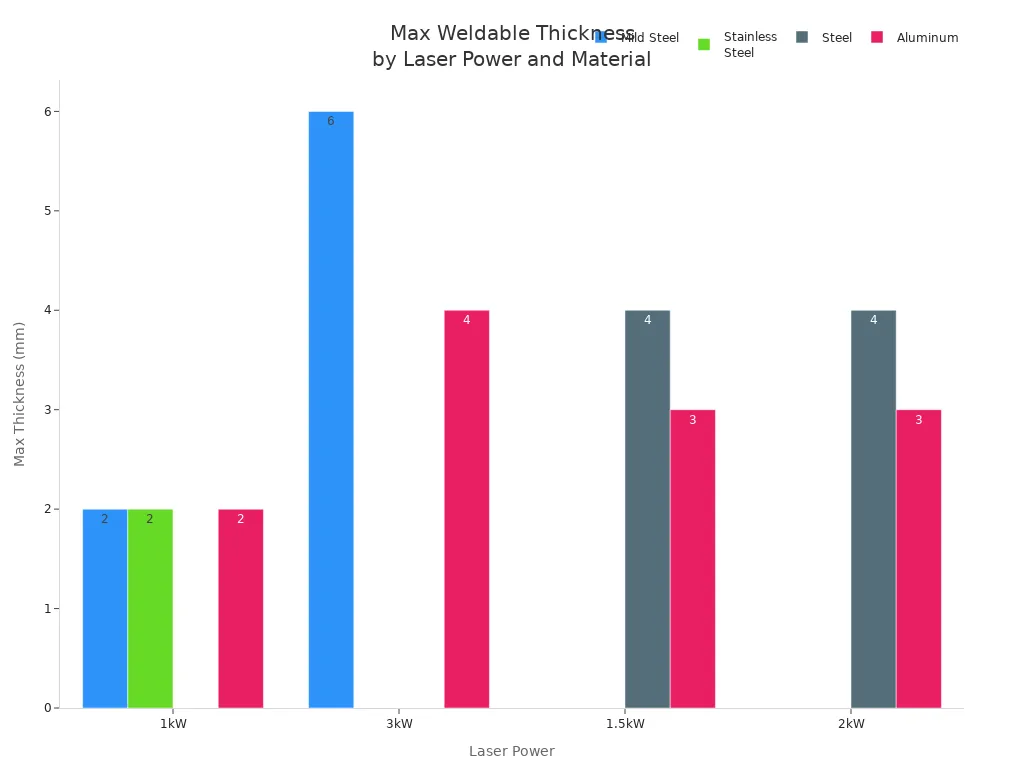
You can switch between different materials and thicknesses with minimal setup. TiHi Laser designs its machines to be user-friendly, so you can adjust parameters quickly and keep your workflow smooth. Whether you work in automotive, aerospace, electronics, or jewelry, you have the flexibility to meet diverse production needs.
When you invest in a fiber laser welding machine, you secure long-lasting performance for both your equipment and your finished products. These machines deliver welds that stand up to demanding environments, repeated stress, and daily wear. You can rely on the welds to maintain their strength and integrity over time, even in critical applications.
The advanced laser technology produces welds with high hardness and excellent tensile strength. You see minimal heat-affected zones, which means the surrounding material retains its original properties. This results in joints that resist cracking, fatigue, and corrosion. The following table highlights the impressive durability characteristics of welds produced by fiber laser welding:
| Aspect | Result |
|---|---|
| Heat Input | 75 J/mm |
| Top Bead Width | 1.2 mm |
| Heat-Affected Zone Width | 0.363 mm |
| Hardness (Fusion Zone) | 502 HV0.3 |
| Hardness (Post-Weld Tempered) | 252 HV0.3 |
| Average Tensile Strength | 773.6 MPa |
| Average Impact Toughness | 64.66 J |
| Minimum Specified Criteria | 585 MPa and 47 J |
| Ductility | Outstanding |
You notice that the average tensile strength of 773.6 MPa and impact toughness of 64.66 J far exceed the minimum requirements for industrial applications. The narrow heat-affected zone, just 0.363 mm wide, helps preserve the base material’s ductility and toughness. This means your welded parts can handle heavy loads and sudden impacts without failure.
TiHi Laser designs each machine for continuous operation, often exceeding 100,000 hours of service life. You benefit from sealed optical components and protective lenses that reduce maintenance needs. The robust construction ensures that your fiber laser welding machine remains reliable, even in high-volume production settings.
Tip: Consistent weld quality and machine durability translate to fewer repairs, less downtime, and greater confidence in your manufacturing process.
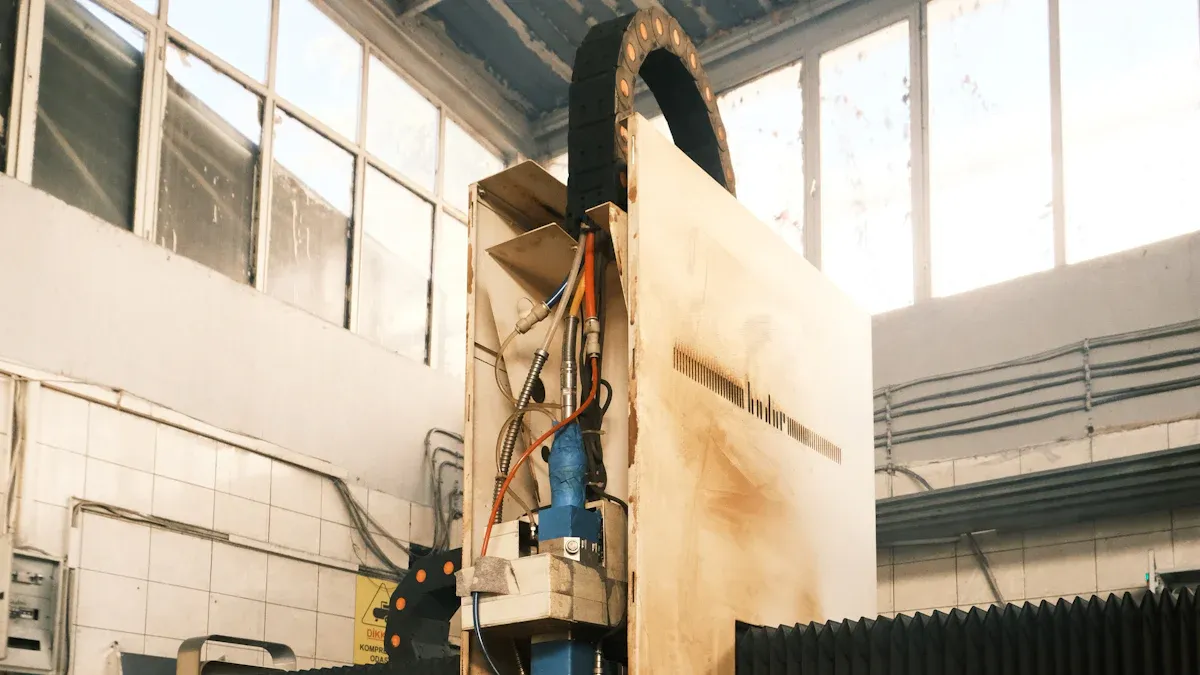
You rely on advanced welding solutions to meet the demands of modern automotive manufacturing. Fiber laser welding machines help you achieve strong, precise joints in chassis components. These machines deliver deep penetration welds with minimal heat distortion, which is essential for maintaining the structural integrity of car frames, suspension parts, and body panels. You can join high-strength steels and lightweight alloys, supporting the trend toward lighter, safer vehicles.
As electric vehicles become more common, you need reliable methods for assembling battery packs and electronic modules. Fiber laser welding plays a key role in this area:
You use it to weld battery trays, ensuring stability and safety for high-voltage systems.
The process creates secure connections in battery packs, which boosts performance and longevity.
You can weld motor components, such as motor hairpins, to optimize efficiency and durability.
Tip: Consistent, high-quality welds in battery and electronic assemblies help prevent failures and extend the life of electric vehicles.
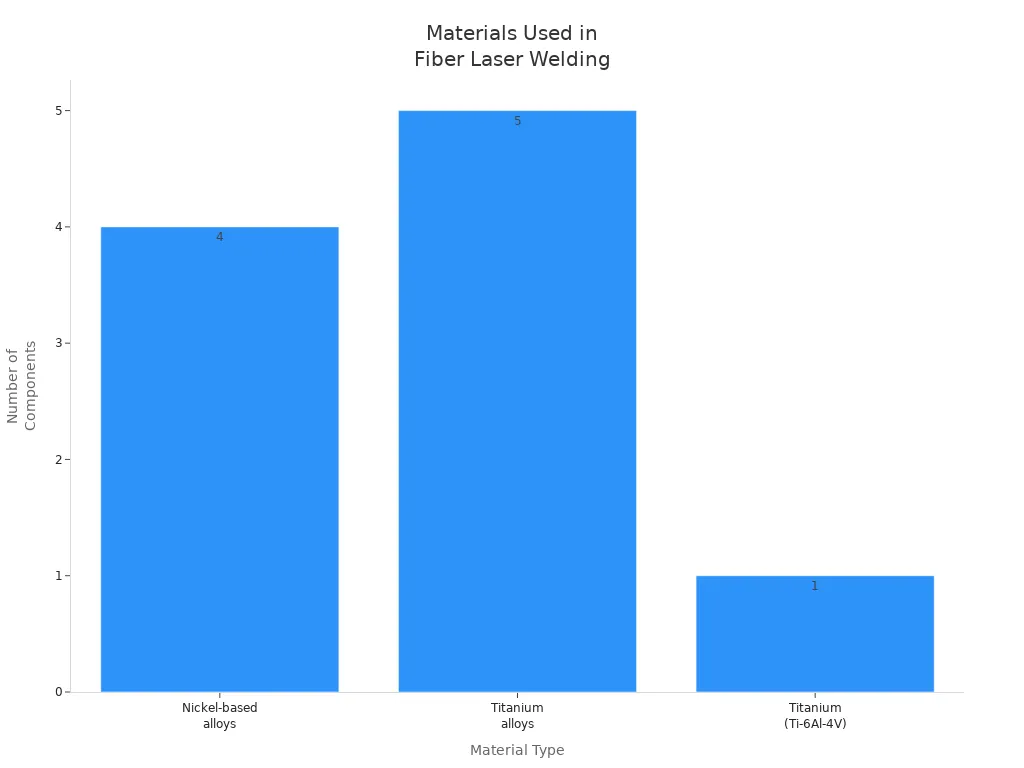
You face strict requirements for strength, weight, and reliability in aerospace manufacturing. Fiber laser welding machines allow you to join advanced materials with precision. The following table highlights common aerospace components and the reasons you choose this technology:
| Component Type | Material Type | Reason for Selection |
|---|---|---|
| Aero-engine components | Nickel-based alloys | Heat resistant characteristics |
| Hot section components | Titanium alloys | Control of weld geometry and microstructure, minimizing porosity and oxidation |
| Turbine disks | Titanium (Ti-6Al-4V) | High strength to weight ratio and corrosion resistance |
| Compressor blades | Titanium alloys | High strength to weight ratio and corrosion resistance |
| Airframe structural components | Titanium alloys | High strength to weight ratio and corrosion resistance |
| Jet engine rings | Nickel-based alloys | Heat resistant characteristics |
| Pressure vessels | Nickel-based alloys | Heat resistant characteristics |
| Rocket engine cases | Nickel-based alloys | Heat resistant characteristics |
| Helicopter rotor hubs | Titanium alloys | High strength to weight ratio and corrosion resistance |
| Fasteners | Titanium alloys | High strength to weight ratio and corrosion resistance |
You see that titanium and nickel-based alloys are common choices because they offer the right balance of strength and resistance to extreme conditions.
You use fiber laser welding to manufacture heat exchangers for aircraft and spacecraft. The process creates airtight, corrosion-resistant joints in thin-walled titanium and stainless steel plates. This ensures efficient heat transfer and long service life, even under high pressure and temperature.
You need precise, reliable welding for electronic connectors. Fiber laser welding machines provide:
High precision and speed, which are critical for mass production.
The ability to weld conductive and reflective materials, such as copper and aluminum.
Strong mechanical and electrical connections, which ensure durability and performance.
You create strong, low-resistance electrical connections with minimal spatter, which is essential for battery tab welding.
The process produces clean, consistent joints, maintaining both mechanical integrity and electrical performance.
You can weld small, tightly-spaced pins, which ensures consistent signal and power integrity.
You use fiber laser welding to assemble frames for smartphones, tablets, and other electronic devices. The technology allows you to join thin aluminum or stainless steel parts with minimal heat input, which prevents warping and maintains the sleek appearance of consumer electronics. You benefit from fast cycle times and repeatable quality, which are vital for high-volume production.
You depend on advanced welding solutions to meet the strict standards of the medical industry. A fiber laser welding machine helps you create precise, reliable joints in a wide range of medical devices. You can use this technology to assemble:
Implantable device casings and components, such as pacemakers and neurostimulators, where you need hermetic seals to protect sensitive electronics.
Surgical and endoscopic instruments, which require smooth, clean welds for easy sterilization and patient safety.
Medical sensors and diagnostic equipment, where you must ensure airtight seals for accurate readings.
You benefit from low heat input, which prevents damage to delicate parts. The welds remain smooth and free of burrs, making them easy to clean and sterilize. This level of quality supports the production of devices that meet regulatory requirements and perform reliably in critical applications.
You face unique challenges when manufacturing orthopedic implants and surgical instruments. The fiber laser welding machine allows you to join components for joint replacements and spinal fixation devices with high strength and minimal thermal impact. You can create strong, validated hermetic seals that protect internal components from bodily fluids. The process produces welds that resist corrosion and fatigue, ensuring long-term performance inside the human body.
Note: Smooth, clean welds reduce the risk of infection and make implants easier to sterilize, which is essential for patient safety.
You need exceptional accuracy when working with fine jewelry. The fiber laser welding machine gives you the control to join delicate gold and silver chains without damaging surrounding areas. You can repair or fabricate intricate links, preserving the original appearance and strength of each piece. Minimal thermal distortion keeps gemstones and precious metals safe during the process.
You often handle tiny, complex components in precision engineering. This technology lets you weld small electronic parts or detailed jewelry pieces with ease. You achieve clean, consistent results, even on the smallest features. The advanced laser system allows for intricate repairs and custom fabrications, supporting both mass production and one-of-a-kind designs.
You maintain the integrity of fine materials.
You avoid affecting nearby areas, thanks to the focused energy.
You deliver high-quality results for both repairs and new creations.
You rely on robust welding solutions for heavy machinery in construction and mining. The fiber laser welding machine supports you in fabricating, cleaning, and cutting various metal parts. You can work with stainless steel, aluminum alloy, carbon steel, and more. This technology adapts to complex manufacturing processes across different industries.
| Application Area | Description |
|---|---|
| Machinery Fabrication | Used for welding, cleaning, and cutting various metal materials in construction and mining. |
| Industries | Applicable in manufacturing, construction engineering, mining, and more with complex processes. |
| Materials | Effective on stainless steel, aluminum alloy, carbon steel, and other metals. |
You gain the flexibility to handle both large-scale equipment and detailed components. This versatility helps you meet the demands of modern construction and mining projects, ensuring strong, durable results every time.
You gain maximum flexibility with handheld fiber laser welding machines. These portable units let you tackle welding jobs in places where traditional equipment cannot reach. You can move freely around large workpieces or tight spaces, making them perfect for on-site repairs and maintenance.
| Feature/Application | Description |
|---|---|
| Long-distance welding | Weld large workpieces over extended distances without moving the part. |
| Material compatibility | Weld thin stainless steel, iron, galvanized plates, and other metals with ease. |
| Welding techniques | Perform tailor, stitch, internal/external fillet, and arc welding. |
| Operational advantages | Simple operation, fast welding speed, and attractive weld seams. |
| Portability | Lightweight design, ideal for fieldwork and reducing bulky setups. |
| Application scenarios | Automotive repairs, metal fabrication, and maintenance tasks benefit most from this design. |
You will find that handheld machines reduce setup time and boost operator efficiency. You can create clean, strong welds, even on delicate materials. The ergonomic design helps you work longer without fatigue. TiHi Laser’s handheld models offer intuitive controls, so you can start welding quickly and achieve professional results every time.
Tip: Choose a handheld fiber laser welding machine when you need portability and versatility for on-site projects.
Single head fiber laser welding machines deliver consistent performance for repetitive welding tasks. You use these machines in production lines where you need reliable, high-quality welds on similar parts. The single head design focuses the laser on one spot, making it easy to control and maintain.
| Type | Applicability | Efficiency | Technical Skills Required | Cost |
|---|---|---|---|---|
| Single Head | Simple, repetitive tasks with low penetration and strength requirements | Medium | Low | Lower equipment and maintenance costs |
You benefit from straightforward operation. You do not need advanced technical skills to achieve good results. This makes single head machines ideal for small to medium manufacturing operations. You can weld thin sheets, frames, and standard components with speed and accuracy. TiHi Laser’s single head models come with user-friendly interfaces and robust construction, ensuring you get reliable performance shift after shift.
Use single head machines for:
Sheet metal fabrication
Standardized parts production
Applications where speed and simplicity matter
Double head fiber laser welding machines give you the power to handle complex and non-standard welding jobs. You can weld parts with irregular shapes or join dissimilar materials, such as aluminum and copper. The double head design allows you to work on two spots at once or perform advanced welding techniques for higher quality results.
| Type | Applicability | Efficiency | Technical Skills Required | Cost |
|---|---|---|---|---|
| Double Head | Complex parts, non-standard shapes, and dissimilar materials | High | Skilled and experienced | Higher due to complexity |
You achieve higher efficiency, especially when working with intricate components. The double head system requires skilled operators, but it rewards you with superior weld quality and fewer common issues like spatter or incomplete penetration. TiHi Laser’s double head machines support advanced customization, letting you adapt to demanding production needs.
Choose double head machines for:
Aerospace and automotive components
Projects involving complex geometries
High-volume production with strict quality standards
Note: Double head machines excel in environments where precision and productivity are critical. You can trust TiHi Laser to provide the right configuration for your specific application.
You can transform your production line with automated fiber laser welding systems. These advanced machines integrate seamlessly with robotics, conveyors, and CNC platforms. You gain the ability to automate repetitive welding tasks, which boosts your productivity and ensures consistent quality across every part.
Automated systems from TiHi Laser offer you a complete solution for high-volume manufacturing. You can program the machine to handle complex welding patterns, intricate assemblies, or large batches of identical components. The system manages the entire process, from part positioning to weld inspection, with minimal human intervention.
Automated fiber laser welding systems help you maintain strict quality standards while reducing manual labor.
You see the biggest impact in industries like automotive, aerospace, and electronics. In automotive production, you can weld hundreds of joints with precision and speed. The system minimizes downtime, so your assembly line keeps moving. In electronics, you join delicate circuit boards and connectors without damaging sensitive parts. The laser’s accuracy ensures every weld meets your specifications.
Here is a table that highlights the main benefits of automated fiber laser welding systems for high-volume manufacturing:
| Benefit | Description |
|---|---|
| Efficiency | Automated systems can reduce production time by up to 40%, significantly increasing throughput. |
| Precision | Laser welding provides exceptional precision, ensuring high-quality welds with minimal distortion. |
| Cost Savings | Reduced labor intervention and lower rejection rates lead to significant cost reductions. |
| Handling Complexity | Capable of managing complex assemblies with consistent quality, enhancing overall production yield. |
You can rely on these systems to handle a wide range of materials and part geometries. The software lets you set parameters for different jobs, so you switch between projects quickly. You also benefit from real-time monitoring and automatic adjustments, which help you catch defects before they become costly problems.
In automotive production, you weld hundreds of joints with minimal downtime.
In electronics manufacturing, you join circuit boards without degrading sensitive components.
TiHi Laser’s automated fiber laser welding machines come in various configurations. You can choose systems with integrated robots for multi-axis welding or select modular setups that fit your existing production line. The machines feature user-friendly interfaces, so you can program and operate them with ease.
Tip: Automated systems are ideal when you need high throughput, repeatable quality, and the flexibility to adapt to changing production needs.
You position your business for growth when you invest in automation. You reduce labor costs, improve product quality, and meet the demands of modern manufacturing. TiHi Laser supports you with expert consultation and tailored solutions, ensuring your automated welding system delivers maximum value.
When you compare fiber laser welding to traditional welding methods, you notice clear differences in efficiency, quality, and cost. Fiber laser welding uses low heat input, which means you see less distortion and a smaller heat-affected zone. Traditional welding often creates more heat, leading to warping and uneven results. You also work much faster with fiber lasers, reaching speeds over 100 inches per minute, while manual welding usually stays between 2 and 6 inches per minute.
Here’s a quick comparison:
| Factor | Laser Welding | Traditional Welding |
|---|---|---|
| Heat Input | Low, less distortion | High, more distortion |
| Speed | Extremely fast, over 100 in/min | Slower, 2–6 in/min |
| Precision and Accuracy | High, narrow welds (as small as 0.1 mm) | Less precise, depends on operator skill |
| Weld Quality | Clean, minimal post-processing | Often uneven, needs cleanup |
| Material Compatibility | Wide range, including thin and heat-sensitive metals | Better for thick materials, struggles with thin sheets |
| Initial Investment | Higher | Lower |
| Operational Costs | Lower over time | Higher due to slower speeds and rework |
| Automation Potential | Highly suitable | Can be automated, but more manual oversight |
| Training Requirements | Specialized training needed | Easier basics, but mastery takes time |
| Applications | Aerospace, electronics, medical devices | General manufacturing, construction, repair |
You gain higher productivity and better weld quality with fiber laser welding, especially in industries that demand precision.
You might wonder how fiber laser welding compares to CO2 laser welding. Fiber lasers offer greater efficiency and faster speeds. You can weld metals with more precision, making fiber lasers the preferred choice for detailed work. CO2 lasers can handle a variety of materials, but they often fall short in beam quality and absorption, especially with reflective metals.
| Feature | Fiber Laser Welding | CO2 Laser Welding |
|---|---|---|
| Efficiency | Highly efficient, minimal heat input | Less efficient |
| Speed | Faster welding speeds | Slower |
| Material Compatibility | Best for precision welding of metals | Can weld various materials, but less effective with metals |
Fiber laser welding gives you a clear advantage when you need speed, efficiency, and the ability to work with reflective or thin metals.
Fiber laser welding machines stand out because of their advanced capabilities. You achieve welds as small as 0.2 mm in width, which is ideal for intricate designs. You can also penetrate up to 25 mm while maintaining the strength of the joint. Production time drops by up to 50% compared to other methods.
Some unique features you benefit from include:
Very high precision and small welds
High speed, up to 3 meters per minute
Smaller heat-affected zone, so you see less distortion
Ability to weld reflective metals like aluminum and copper
More energy-efficient operation
Easier maintenance and longer machine life
With these features, you can take on complex projects, reduce waste, and deliver consistent results across a wide range of applications.
You want your fiber laser welding machine to deliver maximum efficiency in your production environment. Several factors influence how well your machine performs. Precision, speed, and versatility play a major role in meeting your manufacturing goals. You also need to consider how the machine integrates with your existing systems and whether it matches your production requirements.
| Factor | Description |
|---|---|
| Precision | High precision ensures you meet strict industry standards. |
| Speed | Faster welding increases your productivity and output. |
| Versatility | Adaptability lets you handle a wide range of applications. |
| Initial Investment Costs | Upfront costs should be balanced against long-term savings. |
| Production Requirements | The right machine type depends on your specific application needs. |
| Integration with Existing Systems | Seamless integration boosts operational effectiveness. |
| Training and Safety | Proper training reduces errors and accidents. |
| Environmental Impact | Energy efficiency and compliance support sustainability. |
When you select a fiber laser welding machine, consider criteria such as material thickness, power consumption, beam quality, and the type of operation you require. Machines with advanced monitoring and control features help you maintain high efficiency and consistent quality. TiHi Laser offers expert consultation to help you choose a system that fits your workflow and production targets.
Tip: Evaluate your current and future production needs before investing in a new machine. This ensures you get the best return on your investment.
You must prioritize safety when operating fiber laser welding machines. Industry standards from OSHA and ANSI recommend several protocols to protect you and your team. Always use personal protective equipment, such as laser safety eyewear and flame-resistant clothing. Establish Laser Controlled Areas to manage access and exposure to laser hazards.
Wear appropriate PPE at all times.
Conduct hazard assessments to identify risks in your workspace.
Use engineering controls, like barriers and ventilation, to reduce exposure to laser-generated air contaminants.
Regularly inspect equipment and maintain safety systems.
Install local exhaust ventilation to monitor air quality.
Use fire-resistant barriers and keep the area clear of combustible materials.
Equip your workspace with fire extinguishers rated for electrical and metal fires.
Note: Consistent safety practices protect your team and help you maintain compliance with industry regulations.
You keep your fiber laser welding machine running smoothly by following a structured maintenance plan. Regular lubrication reduces friction and wear, which extends the life of your equipment. Clean all components frequently to prevent buildup that can cause failures. Set up a maintenance calendar to ensure you perform all necessary tasks on time.
Lubricate moving parts as recommended by the manufacturer.
Clean optical components and work surfaces regularly.
Follow a maintenance schedule for inspections and part replacements.
Proper training for operators minimizes human error and prevents unnecessary damage. Monitor key performance indicators, such as temperature and power stability, to catch early signs of wear or malfunction. Preventive maintenance reduces the risk of sudden breakdowns and supports long-term reliability.
TiHi Laser provides comprehensive after-sales support, including video technical assistance and online help, so you can resolve issues quickly and keep your operations running efficiently.
When you consider investing in a fiber laser welding machine, you need to understand the full range of costs involved. The total cost of ownership goes beyond the price tag you see at purchase. You should look at both the upfront and ongoing expenses to make a smart decision for your business.
Key Cost Factors
You will encounter several main cost components when you evaluate fiber laser welding machines:
Initial Purchase Costs: This is the price you pay to acquire the machine. It includes the base model and any essential accessories.
Operating Costs: These expenses cover energy consumption, consumables, and materials used during welding. Fiber laser machines are known for their energy efficiency, which helps you save money over time.
Maintenance: Regular upkeep ensures your machine runs smoothly. You will need to budget for replacement parts, cleaning supplies, and periodic servicing.
After-sales Service: The level of support you receive from the manufacturer can affect your long-term costs. Reliable after-sales service reduces downtime and helps you resolve issues quickly.
Tip: Always factor in the total cost of ownership, not just the initial price. This approach gives you a clearer picture of your long-term investment.
What Drives the Price?
Several factors influence the price of a fiber laser welding machine. You should pay attention to these elements when comparing models:
Machine Power: Higher power machines can weld thicker materials and work faster. They usually come with a higher price tag. Choose the power level that matches your production needs to avoid overspending.
Brand and Build Quality: Well-known brands like TiHi Laser may cost more upfront. However, you gain better reliability, advanced technology, and strong customer support. Investing in quality reduces the risk of unexpected repairs and downtime.
Features and Add-Ons: Machines with advanced features, such as automation compatibility, real-time monitoring, or specialized welding heads, may cost more. These features can boost your productivity and improve weld quality, offering value in demanding applications.
How to Choose Wisely
You should match your machine choice to your specific needs. If you run high-volume production, investing in a powerful, feature-rich system pays off in the long run. For smaller operations or specialized tasks, a lower-power or handheld model may offer the best value.
TiHi Laser provides expert consultation to help you select the right configuration. You can discuss your production goals, budget, and technical requirements with their team. This support ensures you get a machine that delivers both performance and cost efficiency.
Note: A well-chosen fiber laser welding machine can lower your operating costs, reduce waste, and increase your return on investment. Always consider both immediate and future needs when making your decision.
You gain unmatched versatility and value when you choose a fiber laser welding machine. Across industries, you can:
Repair delicate jewelry chains or resize rings.
Weld engine parts and create airtight seals in automotive and aerospace.
Join micro-components in electronics.
Sterile weld surgical tools and implants.
Fix or rebuild tooling and molds.
Precision, speed, and material compatibility set this technology apart. You improve quality and efficiency in every application. Reach out to TiHi Laser for expert guidance and solutions tailored to your welding needs.
You can weld stainless steel, carbon steel, aluminum, copper, brass, titanium, gold, and silver. The machine also handles dissimilar metals, such as copper-brass or titanium-gold, making it suitable for many industries.
You should clean optical components, lubricate moving parts, and inspect the system regularly. Follow the manufacturer’s maintenance schedule. TiHi Laser provides support and guidance to help you keep your machine in top condition.
Yes, fiber laser welding is safe when you follow safety protocols. Always wear laser safety eyewear and flame-resistant clothing. Set up laser-controlled areas and use proper ventilation to protect yourself and your team.
Fiber laser welding offers higher precision, faster speeds, and less heat distortion. You achieve cleaner welds with minimal post-processing. The process also uses less energy and produces fewer fumes than traditional welding methods.
You can automate fiber laser welding easily. Many systems integrate with robots, conveyors, or CNC platforms. Automation increases productivity, ensures consistent quality, and reduces labor costs in high-volume manufacturing.
Automotive, aerospace, electronics, medical device manufacturing, jewelry, and construction industries benefit most. You can use the technology for both heavy-duty and delicate applications, thanks to its versatility and precision.
Consider your material type, thickness, production volume, and automation needs. TiHi Laser offers expert consultation to help you select the best configuration for your application and budget.
TiHi Laser offers comprehensive after-sales support, including technical assistance, online help, and maintenance guidance. You can rely on their team to resolve issues quickly and keep your operations running smoothly.

