

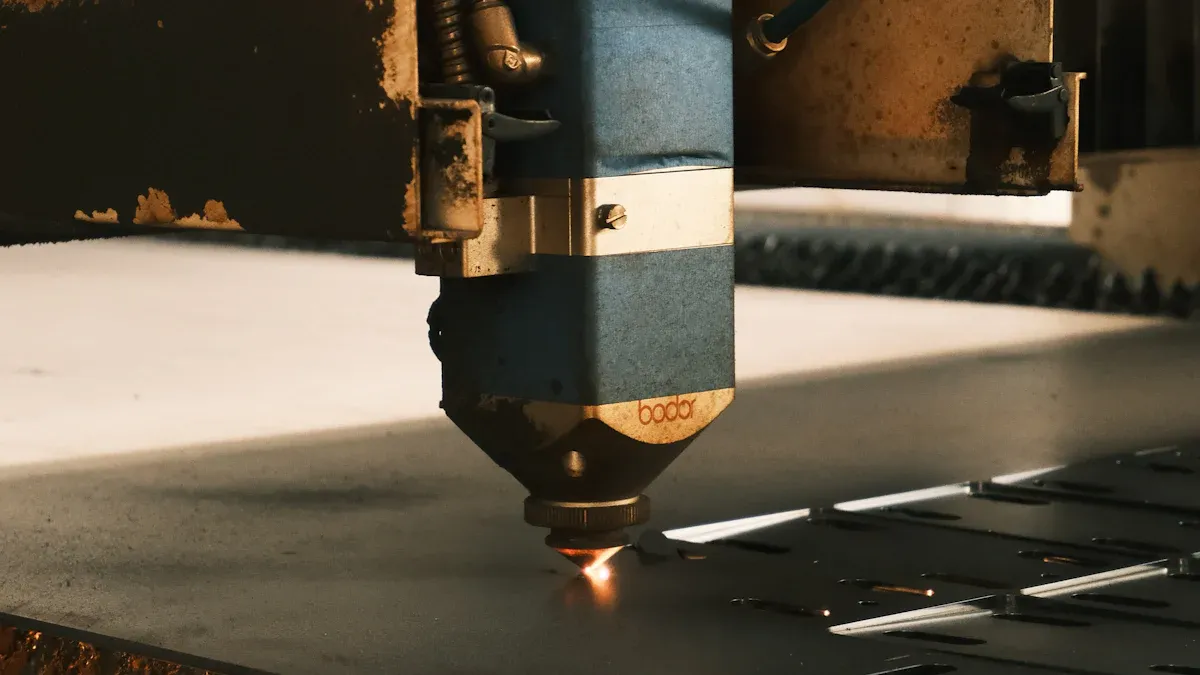
A fiber laser welding machine lets you join metals with unmatched accuracy and speed. TiHi Laser stands at the forefront of this technology, giving you the power to create strong, clean welds every time. You can rely on this advanced tool to handle demanding projects and achieve efficient, high-quality results across a range of materials.
Fiber laser welding machines offer unmatched speed and precision, allowing you to complete projects faster than traditional methods.
The keyhole effect in laser welding creates deep, strong welds with minimal distortion, ensuring high-quality results.
Proper material preparation is crucial for successful welding; clean surfaces and correct machine settings lead to better weld quality.
Advanced control systems in fiber laser machines enhance user experience, making them easy to operate even for beginners.
These machines are energy-efficient, reducing electricity costs and environmental impact compared to traditional welding methods.
Fiber laser welding is versatile, capable of joining various metals, including stainless steel, aluminum, and titanium, across multiple industries.
Regular maintenance and inspections keep your fiber laser welding machine running smoothly and extend its lifespan.
Safety is paramount; always follow guidelines and use protective equipment when operating high-powered laser machines.
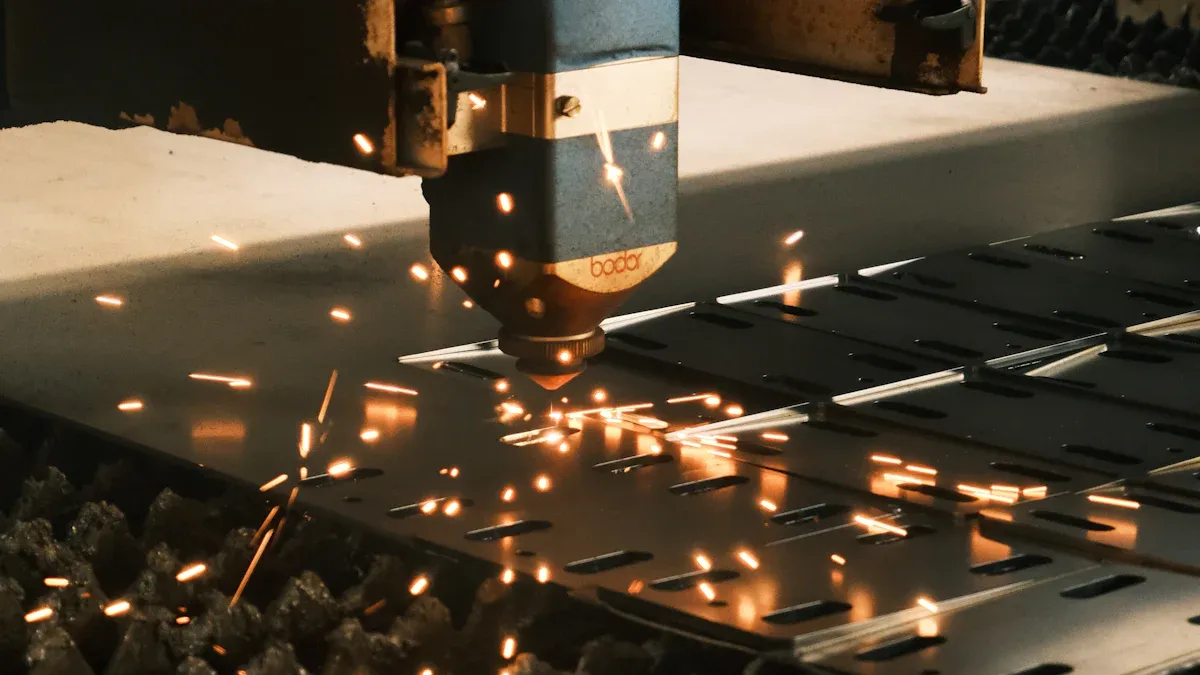
When you use a fiber laser welding machine, you harness a powerful beam of light to join metals. The machine focuses this energy into a tiny spot, creating intense heat in a very small area. This precision allows you to weld materials quickly and with minimal distortion. The laser operates at a typical wavelength of 1064 nm, which is ideal for industrial metal processing. You can select from a wide power range, depending on your project needs.
| Parameter | Value |
|---|---|
| Wavelength | 1064 nm |
| Power Range | 100W to 1kW |
This focused energy melts the metal surfaces, allowing them to fuse together seamlessly. You get clean, strong welds with little need for post-processing.
The keyhole effect sets laser welding apart from other methods. When you direct the laser onto the metal, it creates a small vapor channel, or "keyhole," that lets the energy penetrate deeply. This effect leads to deep welds and high energy absorption. You benefit from a narrow heat-affected zone, which means less warping and fewer residual stresses in your finished product. The keyhole mode uses high power densities, making the process efficient and reliable for a wide range of applications.
Before you start welding, you need to prepare both the machine and the materials. Make sure the fiber laser welding machine is ready for operation. Clean the surfaces of the metals to remove any dirt, oil, or oxidation. Adjust the machine parameters to match your material type and thickness. Position the parts for tack welding to hold them in place.
Once you have prepared everything, you can begin the welding process. Align the laser beam with the joint and start the machine. The laser melts the metal along the seam, fusing the parts together. After you finish, stop the machine and let the weld cool. Inspect the weld to ensure quality. Finally, clean the machine and work area, and dispose of any residues.
Tip: Always check your welds for consistency and strength before moving on to the next step in your project.
Typical Process Steps:
Confirm machine operation, clean welding material, adjust parameters, and position for tack welding.
Start the machine, align the laser beam, and initiate welding.
Stop the machine, allow cooling, and check weld quality.
Clean the machine and materials, and dispose of residues.
Modern fiber laser welding machines, like those from TiHi Laser, come with advanced control systems to help you achieve precise and safe results. You can choose between handheld models for portability or platform models for larger projects. Both types feature user-friendly touchscreens and intuitive controls.
Key control systems include:
Laser Control System: You can manage laser output power, pulse duration, and frequency to get the best weld quality.
Motion Control System: This system ensures the welding head moves accurately along the joint, even for complex shapes.
Numerical Control (NC) System: You can import CAD data, and the machine will translate it into precise welding instructions.
Auxiliary Gas Control System: This manages the flow and pressure of shielding gases, protecting your weld from oxidation.
Safety Systems: You stay protected with features like interlocks, emergency stop buttons, safety enclosures, and exhaust systems.
TiHi Laser also equips its machines with efficient cooling systems. Handheld models use built-in water cooling, while platform models feature external chillers to maintain stable temperatures during long welding sessions. These features help you minimize downtime and keep your production running smoothly.
You demand accuracy in every weld, especially when working with high-value components or intricate assemblies. A fiber laser welding machine gives you unmatched precision. The focused laser beam creates a narrow, controlled weld seam. You can achieve repeatability within microns, which is essential for industries like electronics, medical devices, and aerospace. TiHi Laser’s advanced control systems let you fine-tune every parameter, so you always get consistent results. You also benefit from minimal spatter and a clean finish, which reduces the need for post-processing. This level of precision means you can weld even the thinnest metals without risk of burn-through or excessive heat damage.
You want to complete projects quickly without sacrificing quality. Fiber laser welding stands out for its impressive speed. The technology allows you to finish welds up to four times faster than TIG welding and even outpaces MIG welding. For example:
You can reduce welding time from 90 minutes with TIG to just 10 minutes using a laser welding system.
Laser welding consistently delivers the fastest results, exceeding TIG speeds by four times or more.
This speed advantage means you can boost your productivity and handle more projects in less time. You also minimize downtime, which helps you meet tight deadlines and increase your output.
You need your finished parts to maintain their shape and structural integrity. The fiber laser welding machine uses a highly focused energy source, which creates a small heat-affected zone (HAZ). This feature is crucial because it reduces the risk of warping or deformation in your materials. Compared to arc welding, laser welding completes tasks three to ten times faster and keeps the heat localized. You see less thermal distortion, especially when working with thin metals or heat-sensitive components.
The small HAZ produced by laser welding lowers the chance of warping or deformation.
This benefit is vital for precision engineering, medical devices, and any application where dimensional accuracy matters.
By choosing fiber laser welding, you ensure your parts stay true to their original design, even after joining.
You want to reduce energy costs and improve your environmental footprint. A fiber laser welding machine helps you achieve both goals. This technology uses advanced fiber optics to deliver laser energy directly to the weld seam. You get high electrical-to-optical conversion rates, often exceeding 30%. Traditional welding methods, such as TIG or MIG, usually operate below 20%. This means you use less electricity for the same amount of work.
TiHi Laser designs its machines for maximum efficiency. The system minimizes wasted energy by focusing the laser beam with pinpoint accuracy. You avoid unnecessary heat loss, which keeps your workspace cooler and safer. The efficient design also means you can weld for longer periods without overheating the equipment.
Note: Lower energy consumption does not just save money. It also reduces the strain on your facility’s power supply and supports your sustainability goals.
You benefit from a machine that runs cooler and lasts longer. The efficient cooling systems in TiHi Laser’s models prevent overheating, even during extended use. You spend less on maintenance and replacement parts because the components experience less thermal stress.
Here is a quick comparison:
| Feature | Fiber Laser Welding | Traditional Welding |
|---|---|---|
| Energy Conversion Rate | >30% | <20% |
| Heat Loss | Minimal | Significant |
| Cooling Needs | Lower | Higher |
| Environmental Impact | Low | High |
You can also take advantage of flexible production. The fiber laser welding machine adapts quickly to different materials and thicknesses without wasting energy on unnecessary preheating or post-processing. This flexibility lets you optimize your workflow and reduce idle time.
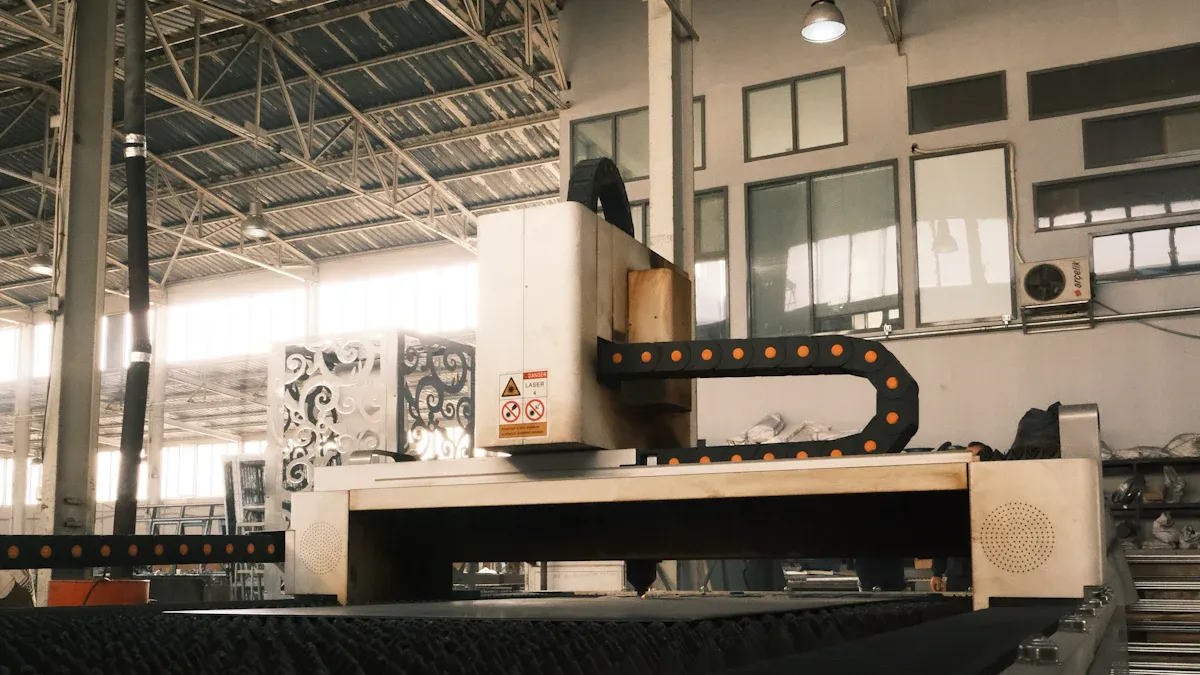
When you use a fiber laser welding machine, you unlock a wide range of possibilities across metals and industries. This technology adapts to your needs, whether you work with delicate electronics or heavy-duty automotive parts.
You can join many types of metals with high precision. The table below shows common metals you can weld and their typical uses:
| Metal Type | Properties and Applications |
|---|---|
| Stainless Steel | Absorbs energy efficiently, allows for deep penetration and narrow welds, low risk of defects; used in automotive and aerospace. |
| Aluminum | High reflectivity and thermal conductivity; requires careful techniques; used in electronics and automotive. |
| Carbon Steel | Versatile; requires management of carbon content; suitable for various industrial applications. |
| Titanium Alloys | Excellent strength-to-weight ratio; used in aerospace and medical devices; precision welding is essential. |
| Nickel and Alloys | Requires precise control; used in aerospace and chemical processing; high-temperature resistance is critical. |
| Copper and Alloys | High thermal conductivity and reflectivity; essential in electronics; requires careful management during welding. |
You can weld stainless steel for automotive frames, aerospace panels, and sanitary equipment. The process creates deep, narrow welds with minimal defects, making it ideal for high-strength applications.
You often use aluminum in electronics and car parts. The fiber laser welding machine handles aluminum’s high reflectivity and thermal conductivity, letting you create strong, clean joints.
You rely on copper for electrical contacts and sensors. The machine’s precise control helps you manage copper’s high thermal conductivity, ensuring reliable welds for electronic components.
You choose titanium for aerospace and medical devices because of its strength and light weight. The machine gives you the precision needed for these critical parts, producing clean welds that meet strict standards.
You find fiber laser welding in many industries. The table below highlights where you can apply this technology:
| Industry | Application Description |
|---|---|
| Automotive | Producing car body parts, welding thin components, joining dissimilar materials like aluminum and steel. |
| Aerospace | Welding lightweight materials like titanium and composites, crucial for aircraft components and safety. |
| Medical Device Manufacturing | Producing intricate components with precise welds, meeting stringent quality standards for safety. |
| Electronics and Consumer Goods | Welding various materials in electronic components and consumer products, enhancing manufacturing efficiency. |
You can weld battery cells, modules, and car body parts. The machine’s speed and accuracy help you meet production goals and safety standards.
You fabricate aircraft parts and repair titanium blades. The machine’s deep penetration and precision support the strict requirements of this industry.
You weld sensors, connectors, and micro-components. The machine’s fine control lets you join tiny parts without damaging them.
You produce small, hygienic devices with clean welds. The machine supports high-quality markings for compliance, such as Unique Device Identification (UDI).
You repair molds, join dissimilar metals, and perform on-site repairs. The machine’s portability and adaptability let you handle a variety of tasks, from emergency fixes to routine production.
Tip: TiHi Laser adapts its machines for each sector, giving you the flexibility to work with different materials and meet industry-specific standards.
When you compare fiber laser welding to TIG and MIG welding, you notice clear differences in speed and quality. Fiber laser welding lets you finish jobs much faster. You also see less heat spreading into your workpiece, which means less risk of warping or distortion. The table below highlights these differences:
| Welding Method | Welding Speed | Heat-Affected Zone |
|---|---|---|
| Fiber Laser Welding | Much faster | Very narrow |
| TIG/MIG Welding | Slower | Wide, causes deformation |
You can complete more projects in less time with fiber laser welding. The narrow heat-affected zone helps you maintain the original shape and strength of your materials. You also spend less time on post-processing because the welds are cleaner and smoother. In contrast, TIG and MIG welding often require extra grinding or finishing to achieve the same quality.
Arc welding has been a standard in many industries, but fiber laser welding brings several advantages. You get minimal post-processing because the laser creates precise, defect-free welds. Arc welding, on the other hand, often leaves behind rough surfaces and more defects, which means you need to spend more time and effort on finishing.
| Welding Method | Post-Processing Requirements |
|---|---|
| Fiber Laser Welding | Minimal, due to high precision and fewer defects |
| Arc Welding | Extensive, due to larger heat-affected zone and potential deformation |
You also benefit from the portability of handheld fiber laser welders. You can easily move them to different locations, making them ideal for on-site repairs or hard-to-reach areas. Arc welding equipment is usually heavier and less flexible, which can slow down your workflow.
Tip: If you want to reduce your workload and improve efficiency, fiber laser welding offers a clear advantage over traditional arc welding.
Fiber laser welding machines give you several key strengths that set them apart from other welding methods:
Wide Material Compatibility: You can weld stainless steel, carbon steel, aluminum alloys, titanium alloys, and even some plastics. This versatility lets you handle a variety of manufacturing needs.
Portability: Handheld models are compact and lightweight. You can transport them easily and use them for on-site jobs or in tight spaces.
Ease of Use: You do not need extensive training to operate a handheld fiber laser welder. The controls are intuitive, so you can start working quickly.
Minimal Post-Processing: You get clean, smooth welds with fewer defects. This reduces the need for grinding or polishing after welding.
High Efficiency: You save time and energy with faster welding speeds and lower power consumption.
By choosing a TiHi Laser fiber laser welding machine, you position yourself at the forefront of modern welding technology. You gain the flexibility, speed, and quality needed to excel in today’s competitive manufacturing environment.
When you consider fiber laser welding machines, you should understand some practical limitations. These factors help you make informed decisions for your manufacturing needs.
1. Initial Investment You face a higher upfront cost when you choose fiber laser welding technology. The advanced components, precision optics, and integrated control systems require a significant financial commitment. You may need to budget for specialized training and installation. However, you often recover these costs through increased productivity and reduced maintenance over time.
2. Material Compatibility You can weld many metals with fiber lasers, but some materials present challenges. Highly reflective metals, such as pure copper or gold, can reflect the laser beam and reduce efficiency. You may need to adjust parameters or use specific shielding gases to achieve optimal results. TiHi Laser machines offer advanced controls to help you manage these situations, but you should test your materials before starting large-scale production.
3. Thickness Limitations You achieve excellent results with thin and medium-thickness metals. For very thick sections, fiber laser welding may require multiple passes or preheating. Traditional arc welding methods sometimes handle thick materials more easily. You should evaluate your project requirements and choose the best process for each application.
4. Surface Preparation You must prepare your materials carefully. Clean surfaces ensure strong, defect-free welds. Any oil, rust, or dirt can interfere with the laser beam and cause weak joints. You should establish strict cleaning protocols in your workflow.
5. Safety Precautions You work with high-powered lasers. You must follow strict safety guidelines to protect yourself and your team. Use proper eye protection, shielding, and ventilation. TiHi Laser machines include advanced safety features, but you should always maintain a safe working environment.
6. Learning Curve You may need time to master fiber laser welding. The technology offers intuitive controls, but you should learn how to adjust parameters for different materials and thicknesses. TiHi Laser provides user-friendly interfaces and training resources to help you get started quickly.
Note: You can overcome most limitations with proper planning, training, and equipment selection. TiHi Laser supports you with expert guidance and adaptable solutions.
| Limitation | Description | How TiHi Laser Helps |
|---|---|---|
| Initial Investment | High upfront cost | Long-term savings, training support |
| Material Compatibility | Challenges with reflective metals | Advanced controls, parameter tuning |
| Thickness | Best for thin/medium metals | Application advice |
| Surface Preparation | Requires clean surfaces | Workflow recommendations |
| Safety | Needs strict protocols | Built-in safety features |
| Learning Curve | Requires training | User-friendly design, training |
You should weigh these limitations against the many advantages of fiber laser welding. With TiHi Laser, you gain access to expert support and innovative technology that helps you maximize your results.
You want a welding machine that makes your job easier, not harder. TiHi Laser designs its fiber laser welding machines with user-friendly controls and intuitive interfaces. You can start welding quickly, even if you have limited experience. The touchscreen panels let you adjust parameters with just a few taps. Handheld models give you the flexibility to move around your workspace or perform on-site repairs without hassle. You do not need to spend hours learning complicated procedures. The system guides you through setup and operation, so you can focus on getting quality welds.
You also benefit from features like automatic parameter presets and real-time monitoring. These tools help you avoid mistakes and maintain consistent results. If you need to switch between materials or welding modes, you can do so with minimal downtime. TiHi Laser’s machines support multiple languages, making them accessible for diverse teams. You save time and reduce training costs, which boosts your productivity.
Tip: Use the built-in red light guide to align your weld path accurately before starting. This feature helps you achieve precise results every time.
Your safety is a top priority when working with high-powered lasers. TiHi Laser equips its machines with advanced safety mechanisms to protect you and your team. You must always wear protective eyewear, such as welding helmets or safety glasses with UV and IR filters. The work area should have clear hazard signage and physical barriers to prevent accidental exposure.
Enclosures made from non-reflective materials keep laser radiation contained.
Emergency shutoff systems let you stop the machine instantly if needed.
Only trained personnel should access the laser area.
Personal protective equipment (PPE) includes flame-resistant clothing, gloves, and face shields.
Observers must stay in designated safe zones, often behind shields or rated laser windows.
You also benefit from automatic shutdown features. The machine will not operate unless the welding torch is correctly positioned, reducing the risk of accidental exposure. Regular safety training ensures everyone knows how to handle the equipment properly.
Note: Always follow safety protocols and keep your workspace organized to minimize risks.
You want your equipment to run smoothly with minimal interruptions. TiHi Laser designs its fiber laser welding machines for low maintenance and long-term reliability. You can keep your machine in top condition by following a simple maintenance schedule.
| Maintenance Task | Frequency/Interval |
|---|---|
| Clean the protective lens | At least weekly |
| Replace the protective lens | At least once a year |
| Measure and track laser power | Regularly |
| Adjust the focus | Periodically |
| Professional inspections and evaluations | Annually or twice a year |
You spend less time on upkeep because the machines use durable components and efficient cooling systems. TiHi Laser offers comprehensive warranty coverage and video outgoing inspections to ensure your machine works perfectly from day one. These features help you minimize downtime and maximize productivity, so you can focus on your work instead of repairs.
Tip: Schedule regular professional inspections to catch potential issues early and keep your welding operations running at peak performance.
When you consider investing in a fiber laser welding machine, you want to understand the full cost picture. You look beyond the price tag and evaluate the value you receive over the machine’s lifetime. TiHi Laser helps you make a smart investment by focusing on both upfront and ongoing costs.
1. Initial Investment
You pay more upfront for a fiber laser welding machine than for traditional welding equipment. This higher price reflects the advanced technology, precision optics, and robust build quality. TiHi Laser offers both handheld and platform models, so you can choose the configuration that fits your budget and production needs.
| Cost Factor | Fiber Laser Welding | Traditional Welding |
|---|---|---|
| Upfront Equipment | Higher | Lower |
| Installation/Training | Moderate | Low |
Tip: You often recover your initial investment quickly because of the machine’s efficiency and low operating costs.
2. Operating Costs
You save money every day you use a TiHi Laser machine. Fiber laser welding uses less electricity than TIG or MIG welding. The high energy conversion rate (over 30%) means you spend less on power bills. You also avoid the cost of consumables like welding rods or filler wire, which traditional methods require.
You use less shielding gas because the process is more efficient.
You spend less time on post-processing, which reduces labor costs.
You avoid frequent part replacements due to the machine’s long lifespan.
3. Maintenance and Downtime
You want your equipment to run smoothly with minimal interruptions. TiHi Laser designs its machines for reliability and easy maintenance. You spend less on repairs and replacement parts. The efficient cooling system and durable components help you avoid unexpected breakdowns.
Note: Regular maintenance keeps your machine running at peak performance and extends its service life.
4. Long-Term Value
You gain long-term value from your investment. The machine’s precision and speed help you increase your output and take on more projects. You improve your product quality, which can lead to more business and higher profits. TiHi Laser’s support and training resources help you get the most from your machine.
Summary Table: Cost Benefits
| Benefit | How You Save Money |
|---|---|
| Energy Efficiency | Lower electricity bills |
| Minimal Consumables | Fewer ongoing supply purchases |
| Reduced Labor | Less time spent on finishing work |
| Low Maintenance | Fewer repairs and replacements |
| High Productivity | More projects completed |
When you choose TiHi Laser, you invest in a solution that pays off over time. You reduce your total cost of ownership and maximize your return. If you want to learn more about financing options or get a custom quote, you can contact TiHi Laser’s team for expert advice.
You need to ensure every weld meets strict quality standards. Fiber laser welding gives you several reliable inspection methods. You can use laser-based vision systems to scan the weld seam. These systems analyze the 3D profile of each weld, helping you spot surface defects without damaging the part. You also have access to non-destructive testing techniques. Ultrasonic testing sends sound waves through the weld to detect hidden flaws. Radiographic testing uses X-rays to create images of the weld’s internal structure, revealing any gaps or cracks.
Sometimes, you need to perform destructive testing for deeper analysis. You might use tensile testing, where you pull the welded part apart to measure its strength. Acid etching helps you see how well the weld penetrates and fuses the materials. These methods give you confidence that your welds will hold up under real-world conditions.
Tip: Regular inspection helps you catch problems early and maintain high standards in your production line.
Common Weld Inspection Methods:
Laser-based vision system for non-destructive 3D profiling
Ultrasonic and radiographic testing for internal defect detection
Tensile testing and acid etching for strength and fusion analysis
You want every weld to be flawless, but certain defects can occur if you do not control the process carefully. The table below shows the most frequent types of defects in fiber laser welding, their causes, and how you can prevent them.
| Defect Type | Causes | Solutions |
|---|---|---|
| Porosity | Surface contamination, inadequate shielding gas, material impurities, rapid cooling | Clean surfaces, optimize shielding gas flow, select proper materials, tune welding parameters |
| Cracking | High thermal gradients, material composition, impurities, hydrogen absorption | Preheat materials, control composition, manage hydrogen, use stress relief techniques |
| Undercut | Excessive heat input, incorrect beam angle, improper focus | Adjust heat input, align beam correctly, refine welding technique |
| Lack of Fusion | Unstable environment, poor shielding gas quality, movement during welding | Stabilize conditions, use high-quality shielding gas, secure parts with proper fixturing |
You can avoid most defects by preparing your materials, setting up the machine correctly, and monitoring the welding environment. Clean surfaces and stable conditions help you achieve strong, reliable welds.
Note: Consistent inspection and process control reduce the risk of defects and improve your final product.
You need consistent welds to maintain product quality and meet industry standards. Automated fiber laser welding systems help you achieve this goal. You can use real-time weld measurement to track the depth of each weld with micron-level accuracy. In-process monitoring lets you observe plasma emissions and surface temperature, giving you instant feedback on weld quality.
Non-destructive testing, such as ultrasonic and radiographic methods, helps you check for internal defects without harming the weld. Statistical process control allows you to log and analyze welding data continuously. This approach helps you optimize your process and maintain consistency across batches.
| Evidence Type | Description |
|---|---|
| Real-Time Weld Measurement | Measures weld keyhole depth with micron-level accuracy. |
| In-Process Monitoring | Tracks plasma emissions and surface temperature for instant feedback. |
| Non-Destructive Testing (NDT) | Detects internal defects without damaging the weld. |
| Statistical Process Control | Logs and analyzes welding parameters to optimize consistency and quality. |
You should secure parts with proper clamping and minimize gaps between materials. Custom fixtures help you position the laser accurately and maintain alignment throughout the welding process.
Tip: Consistent setup and monitoring lead to repeatable, high-quality welds every time you use your TiHi Laser fiber laser welding machine.
You gain a powerful edge in manufacturing when you choose a fiber laser welding machine. TiHi Laser leads the industry with advanced solutions that deliver speed, precision, and reliability. See the main advantages below:
| Advantages | Description |
|---|---|
| Speed | Fast welding speeds for many applications |
| Precision | Easy control and repeatable weld quality |
| Versatility | Welds a wide range of metals, including dissimilar materials |
| Low Maintenance | Minimal upkeep compared to traditional methods |
| Energy Efficiency | Low heat input reduces distortion and material damage |
Consider TiHi Laser for your next project. Reach out for expert advice or a tailored solution.
You can weld stainless steel, aluminum, copper, titanium, and many alloys. The machine adapts to different thicknesses and material types. You achieve strong, clean welds on both similar and dissimilar metals.
You clean the protective lens regularly, check the cooling system, and schedule professional inspections. TiHi Laser machines require minimal maintenance. You keep your equipment running smoothly by following the recommended maintenance schedule.
Yes, you stay safe by following proper procedures. TiHi Laser machines include safety features like interlocks, emergency stops, and protective enclosures. Always wear appropriate eye protection and use shielding to prevent accidental exposure.
Absolutely! You can use handheld models for on-site repairs and hard-to-reach areas. These portable machines weigh less than 30 kg, making them easy to transport and set up wherever you need them.
You weld faster and with greater precision using fiber laser technology. You see less heat distortion and spend less time on post-processing. Fiber laser welding also uses less energy and offers more flexibility for different materials.
You find fiber laser welding in automotive, aerospace, electronics, medical, and general manufacturing. The technology supports high-quality production, repairs, and custom fabrication across many sectors.
You do not need extensive training. TiHi Laser machines feature user-friendly interfaces and intuitive controls. You can start welding quickly, even if you have limited experience. Training resources and support are available if you need them.
You can expect a TiHi Laser fiber laser welding machine to last over 100,000 hours. The robust design and efficient cooling system ensure long-term reliability and minimal downtime.

